"The judgment will certainly be a significant one, and will likely find its way into the next edition of constitutional and administrative law casebooks read by all Canadian law students."
On November 10, 2017, the Government of Manitoba passed The Medical Assistance in Dying (Protection for Health Professionals and Others) Act. The legislation specifically protects the rights of those who refuse to aid in the provision of medical assistance in dying on the basis of his or her personal convictions.
"The right to autonomy of religious communities is a fundamental principle recognized in international law. Canada has agreed to uphold this principle in its international commitments. The present case demonstrates a need and presents an opportunity to expressly affirm religious autonomy in Canadian jurisprudence."
Yesterday, the Supreme Court of Canada reaffirmed that government actors have a duty to specifically consider religious freedom concerns when raised by claimants in its Ktunaxa Nation v. British Columbia decision. This historic case – the first Indigenous religious freedom claim to be heard by the Supreme Court - raised questions about the scope of religious freedom, and the means by which religious communities can practise and manifest their faith. Christian Legal Fellowship (CLF) and The Evangelical Fellowship of Canada (EFC) jointly intervened in the case.
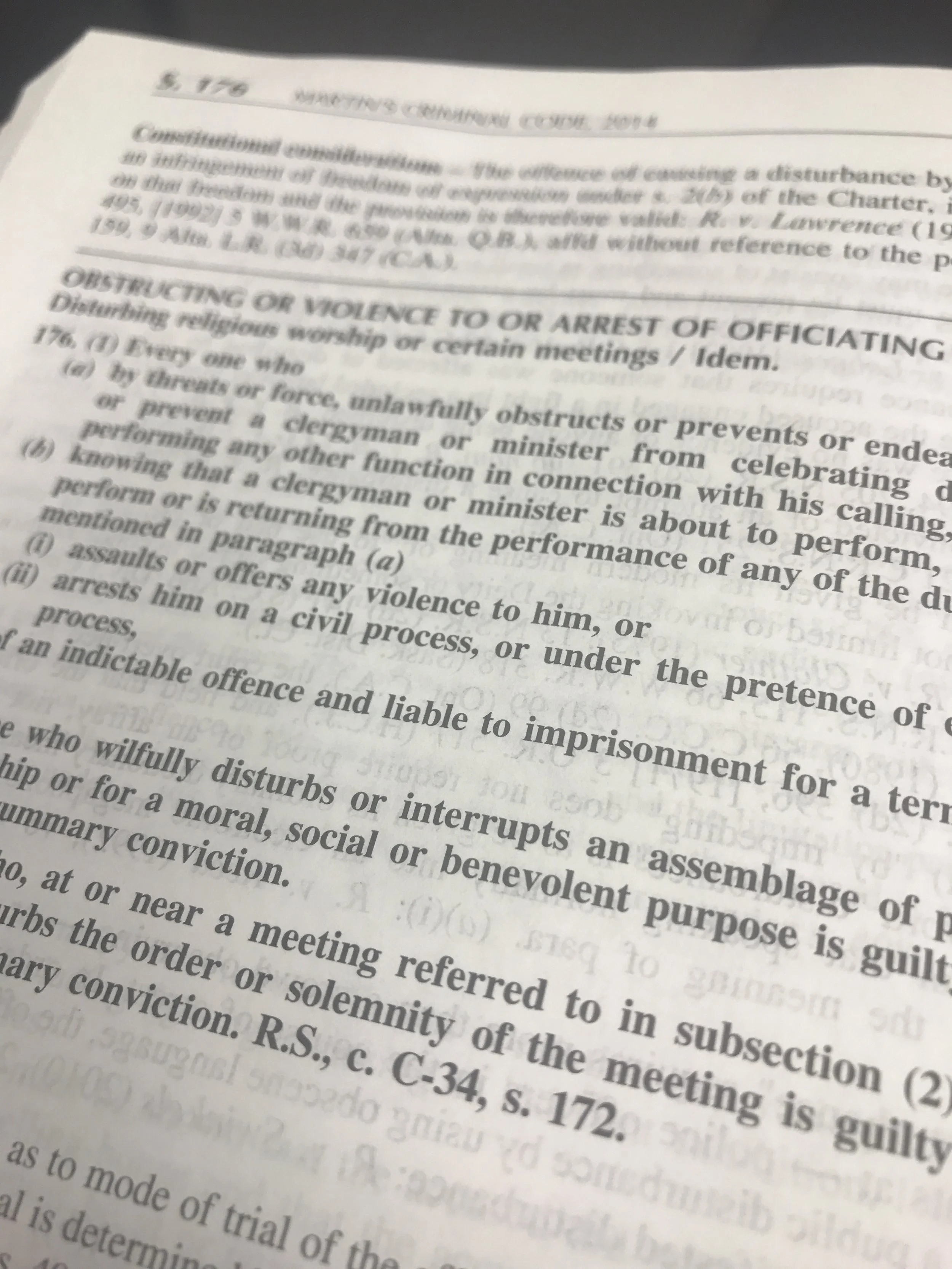
"[C]itizens must be free to meet, worship, and collectively express themselves without fear of being silenced by reprisal or intimidation. Canada’s historical reality regarding the oppression of religious and other minority groups – some of which has been effectively prosecuted under section 176 – must not be forgotten. The Supreme Court of Canada’s recognition that section 176 protects the public interest remains a salient one. The inclusion of section 176 in the Criminal Code demonstrates Canada’s ongoing societal commitment to protect the fundamental freedoms of religious expression and association."