By Haneen Bishara, 3L Law Student at Western University Faculty of Law
On a crisp fall day in Vancouver, during a break at the CLF National Conference, a simple conversation sparked what would become a new and meaningful initiative within the Christian Legal Fellowship. My friend Ebun and I, both CLF student chapter executives, were reflecting on our aspirations for our respective chapters and discussing the strengths of CLF’s student programming. While CLF National has long demonstrated a strong commitment to professional development of law students through initiatives like its national student conference and the Christian Legal Institute, we identified another need: a dedicated space for advocacy development. That realization led us to ask a simple but powerful question—what if CLF had its own moot?

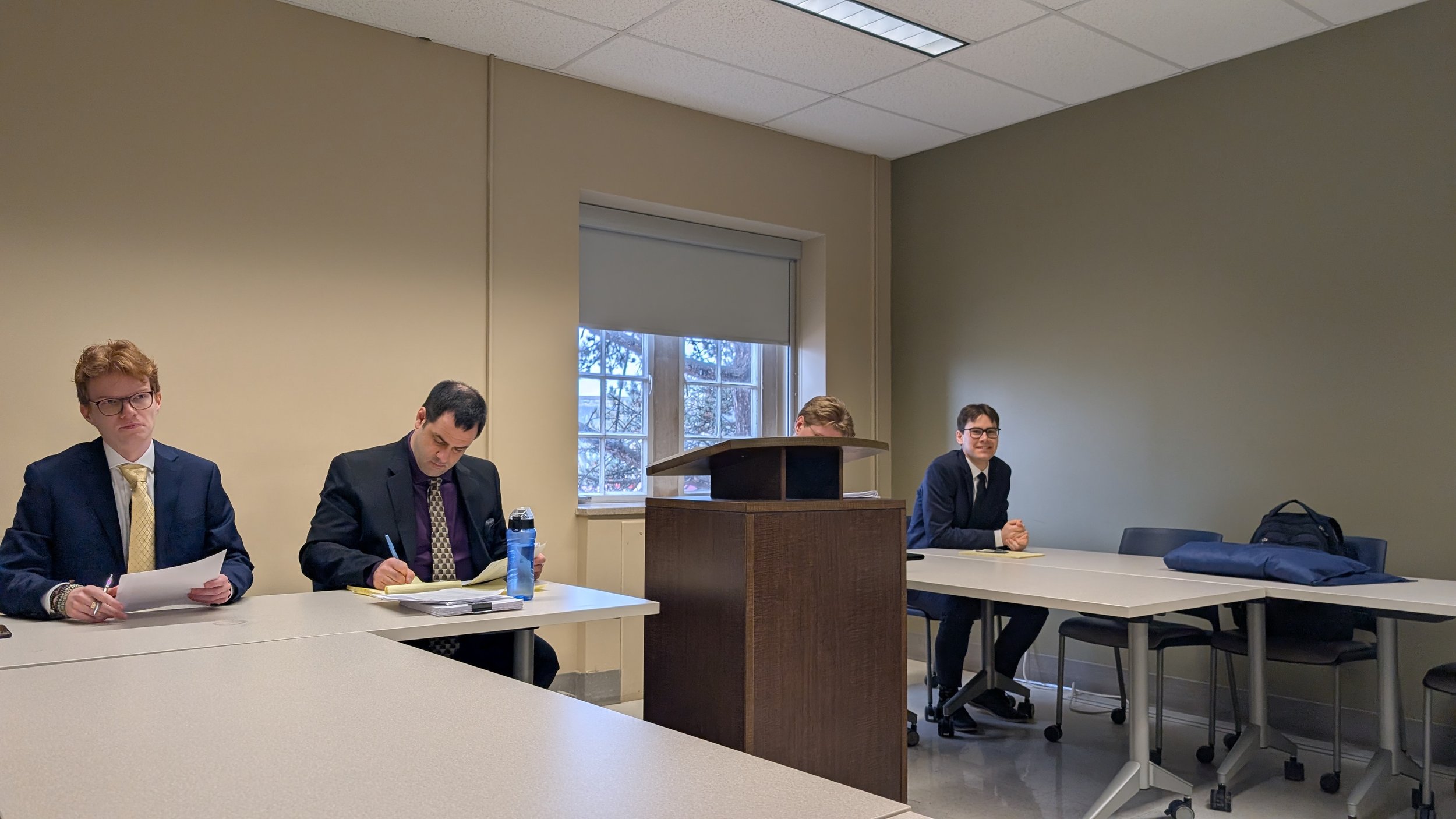
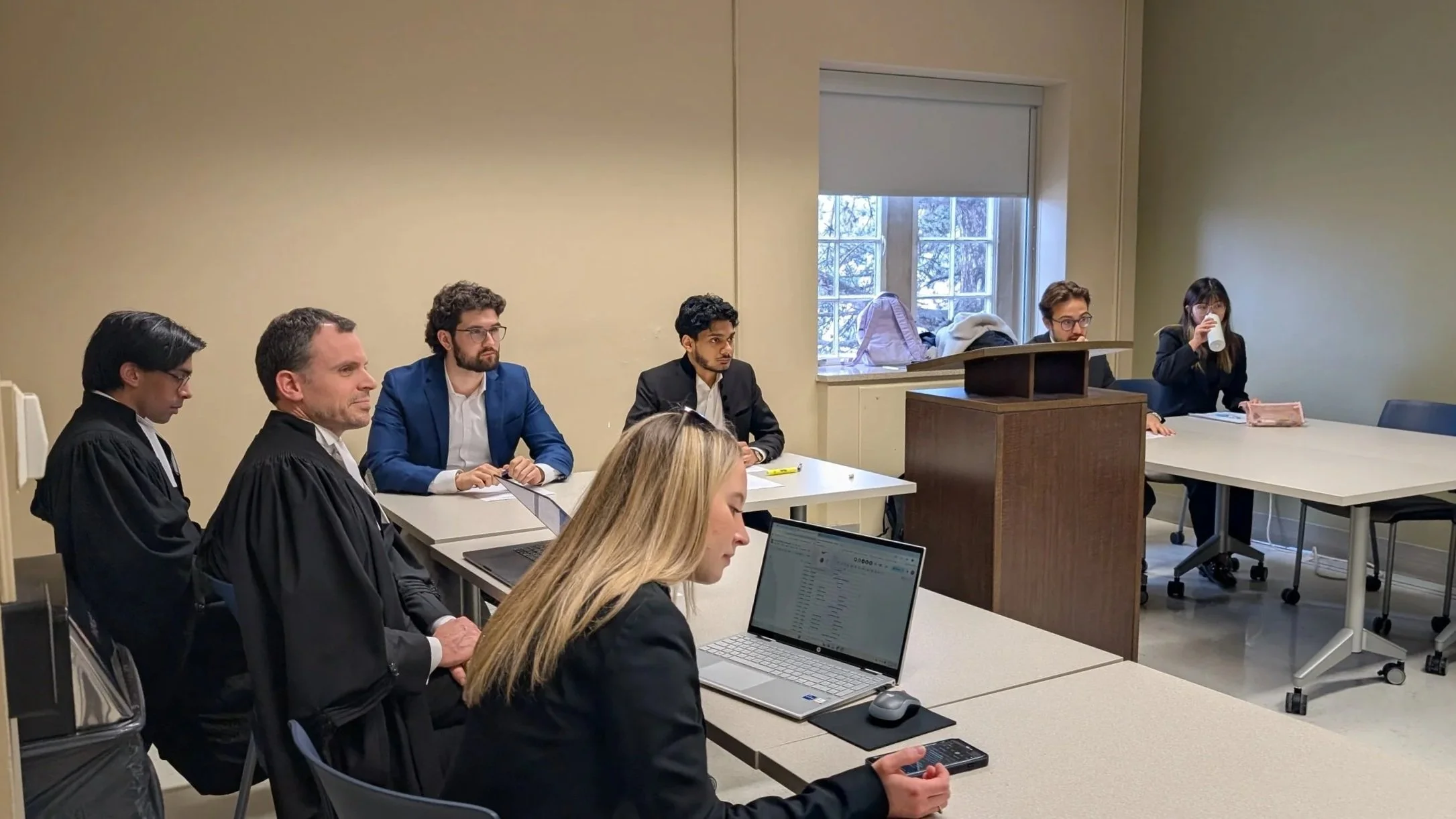
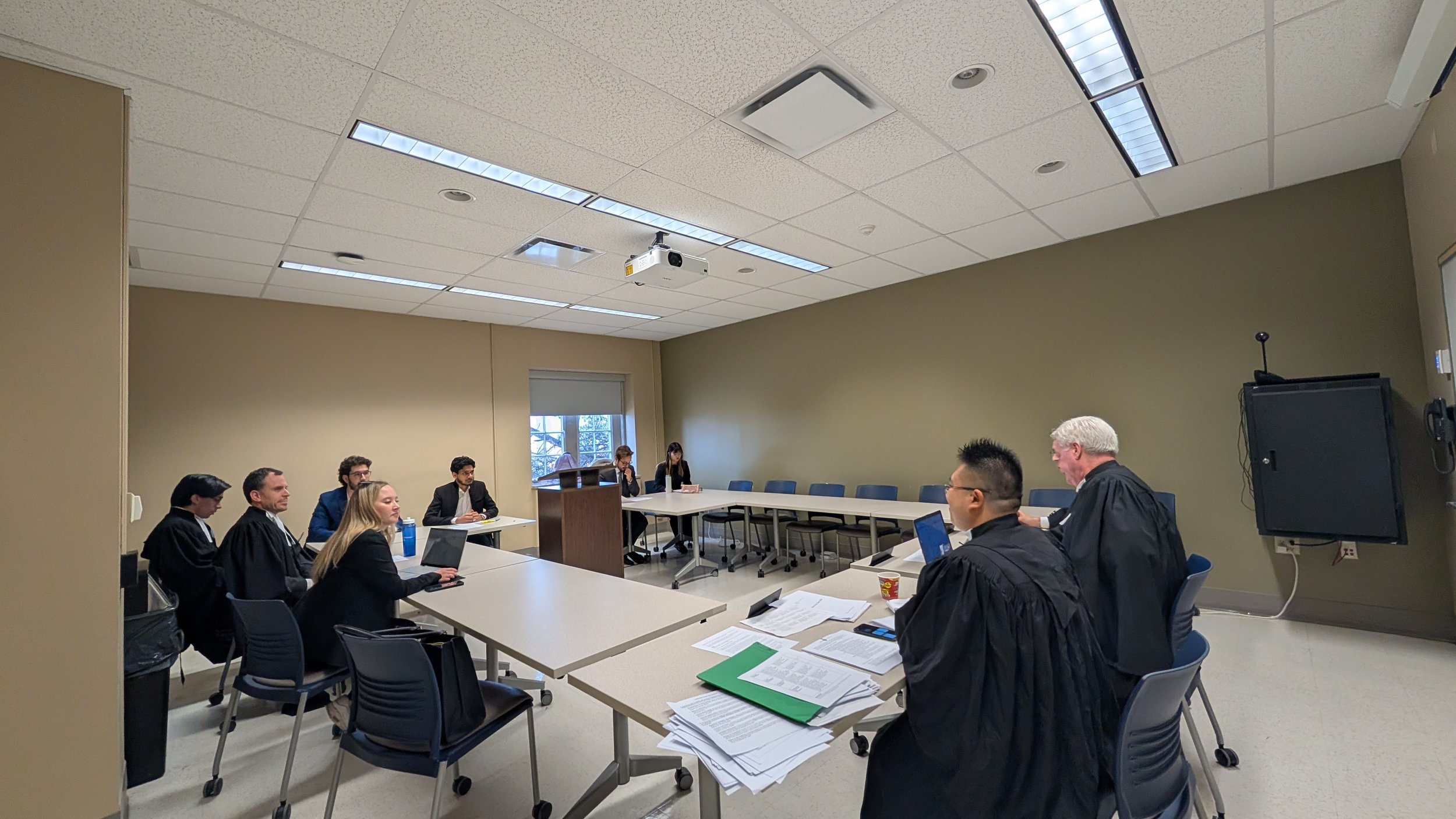
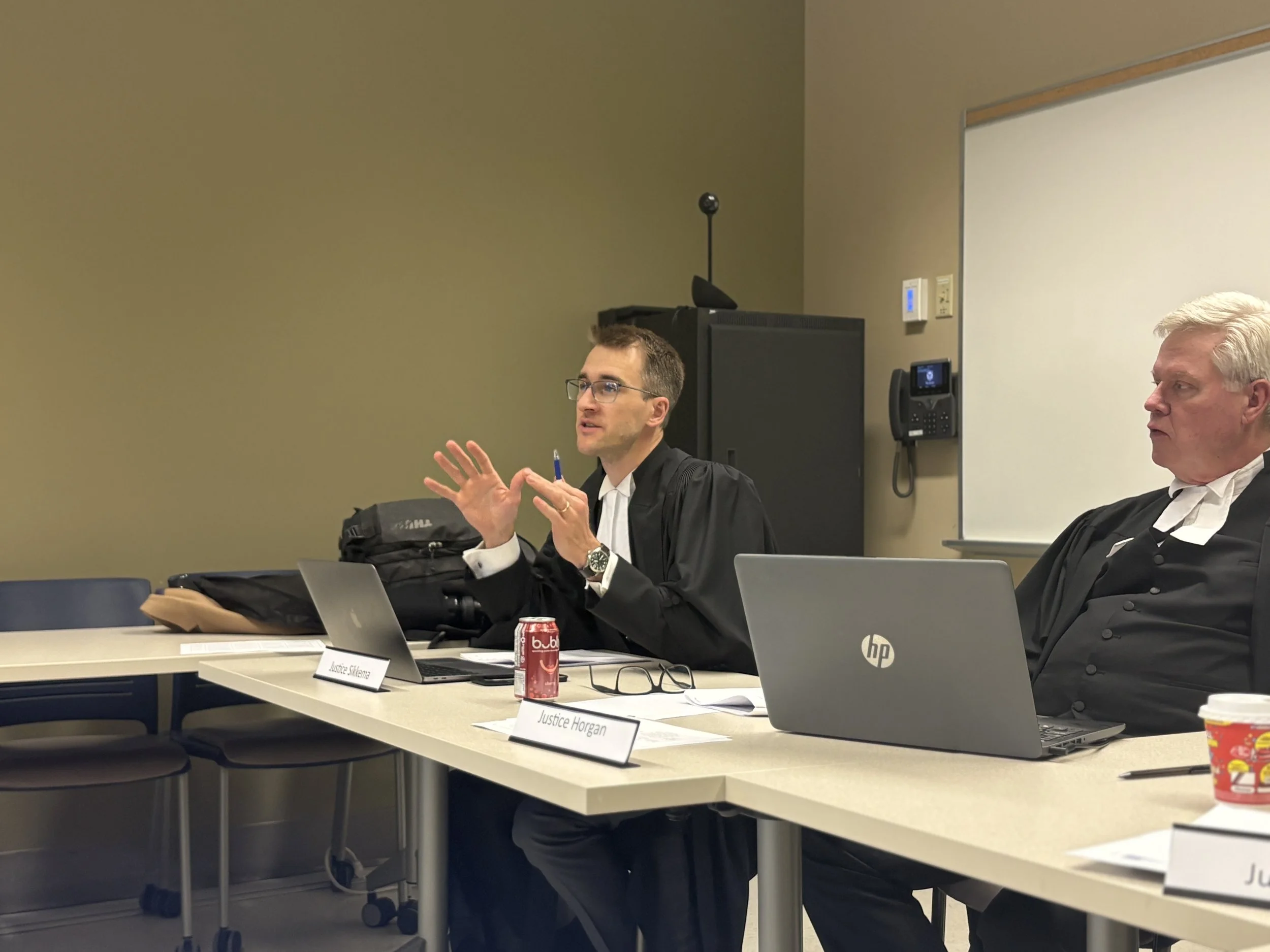
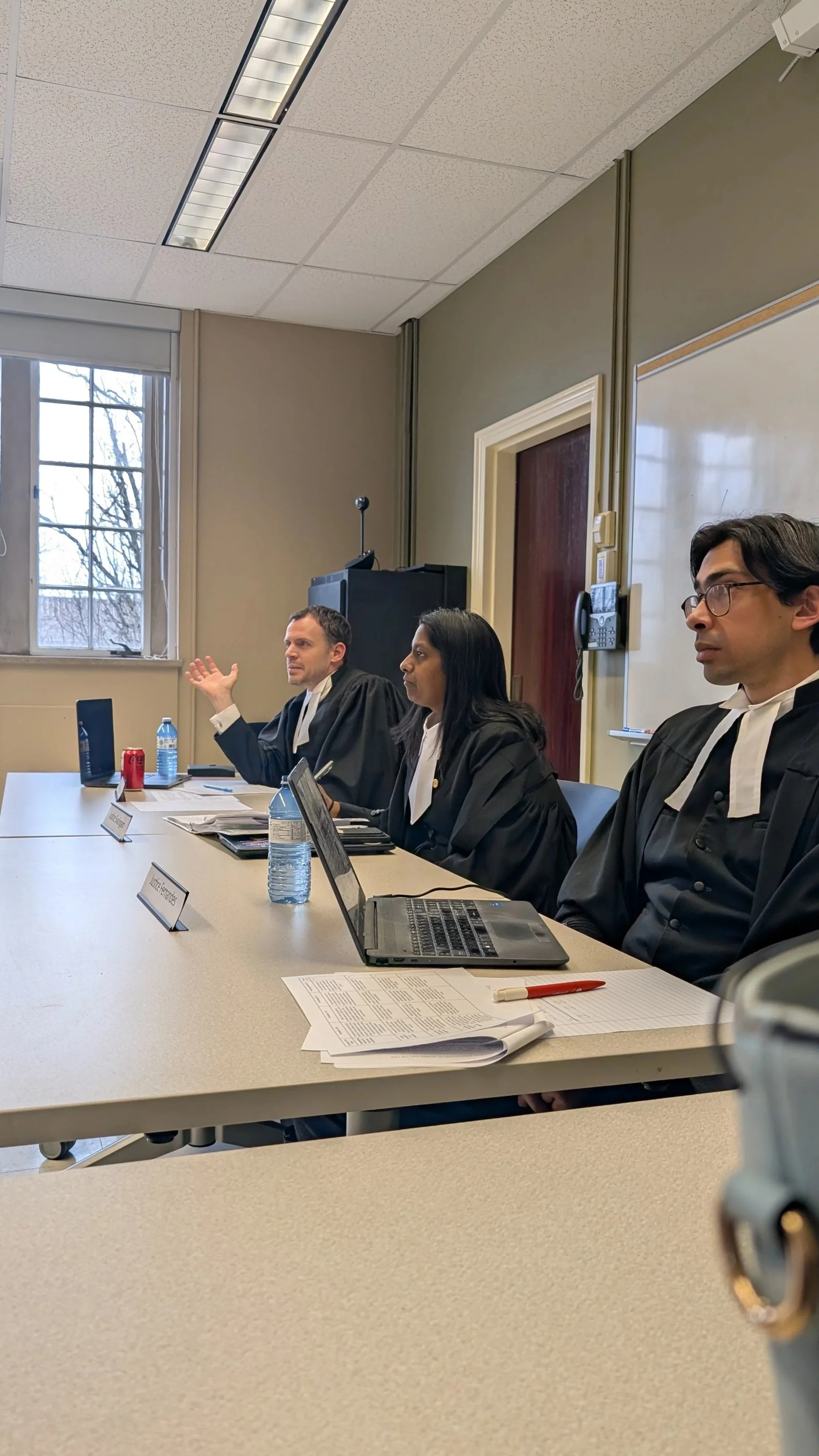
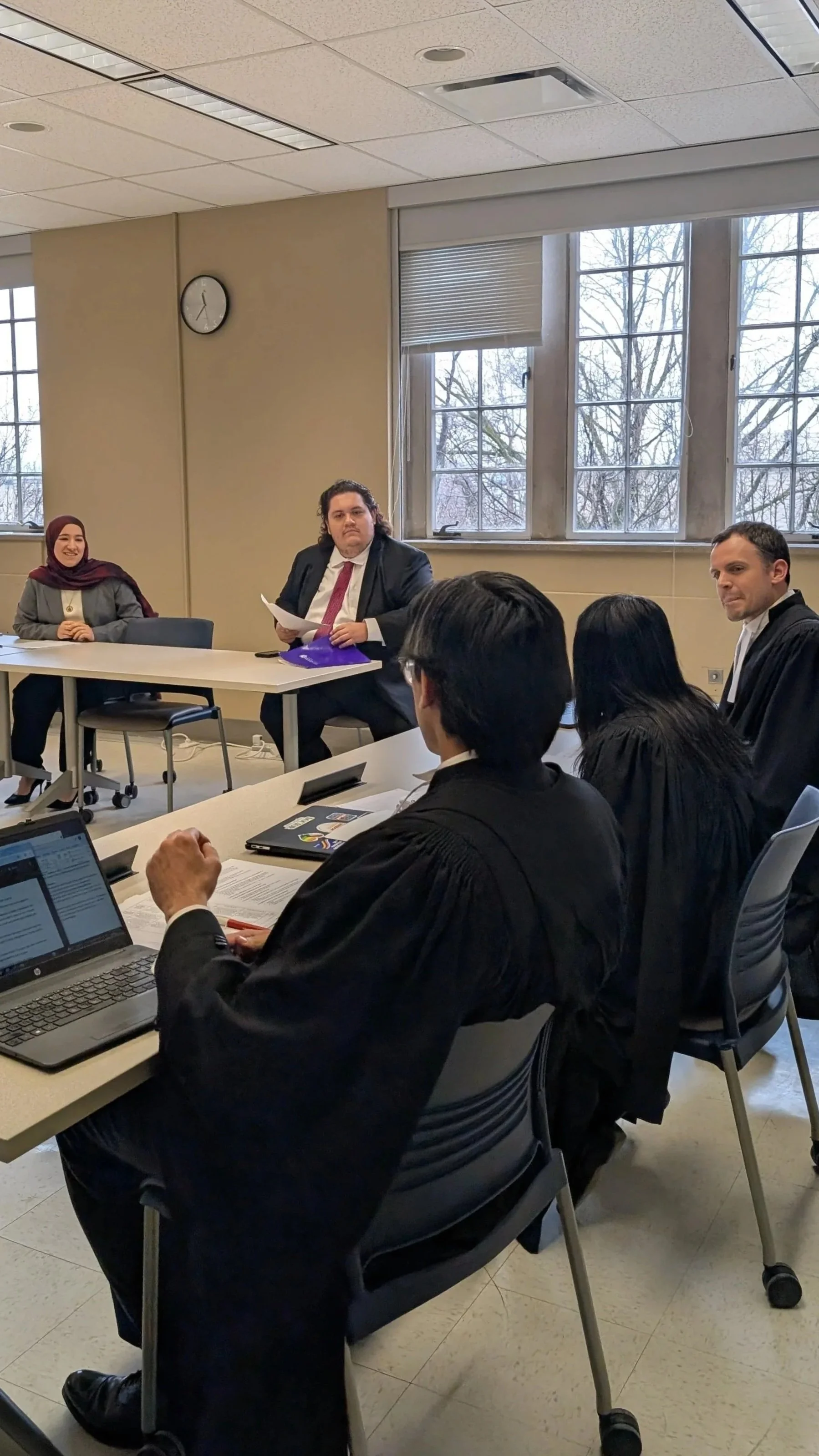
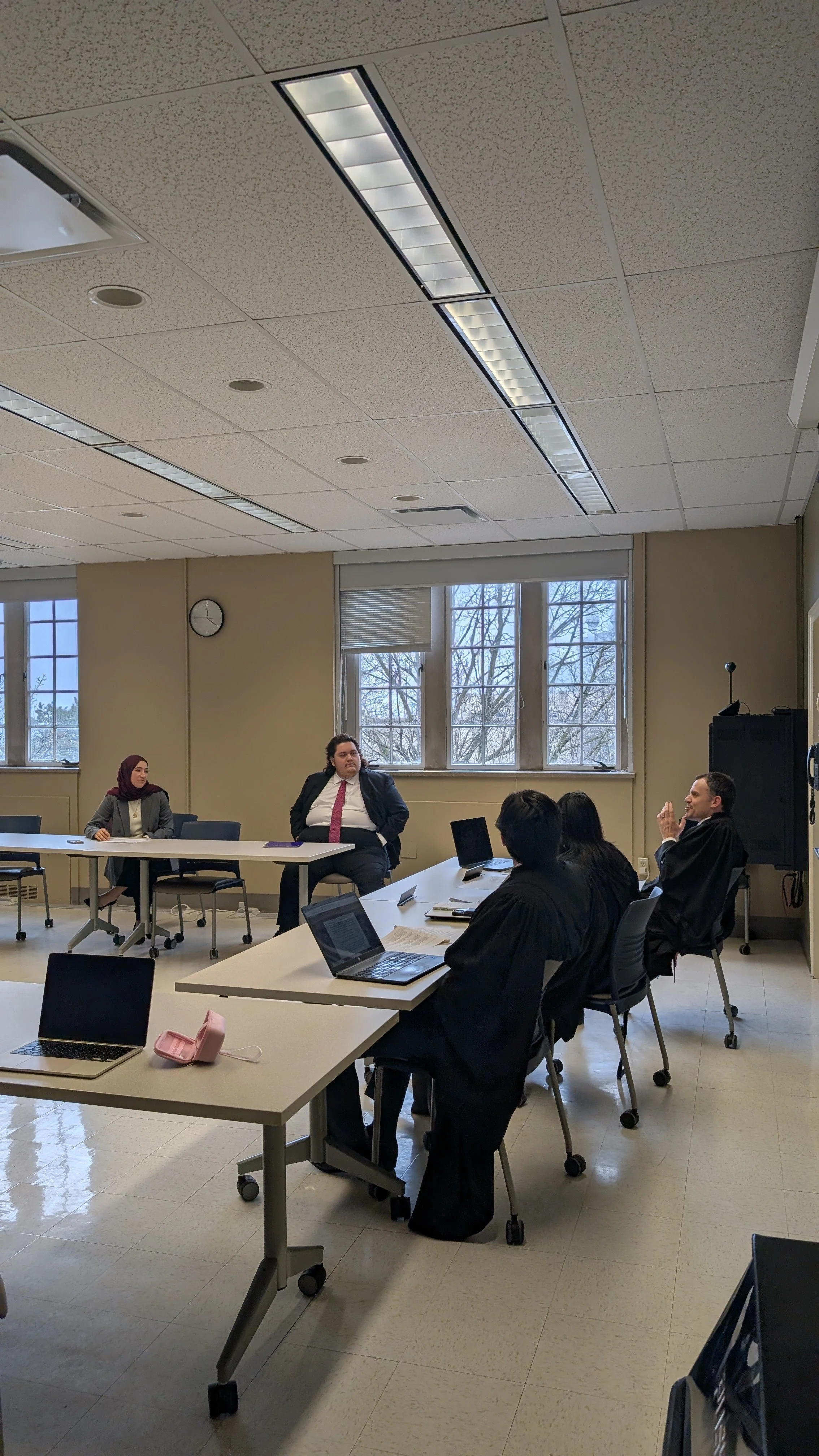
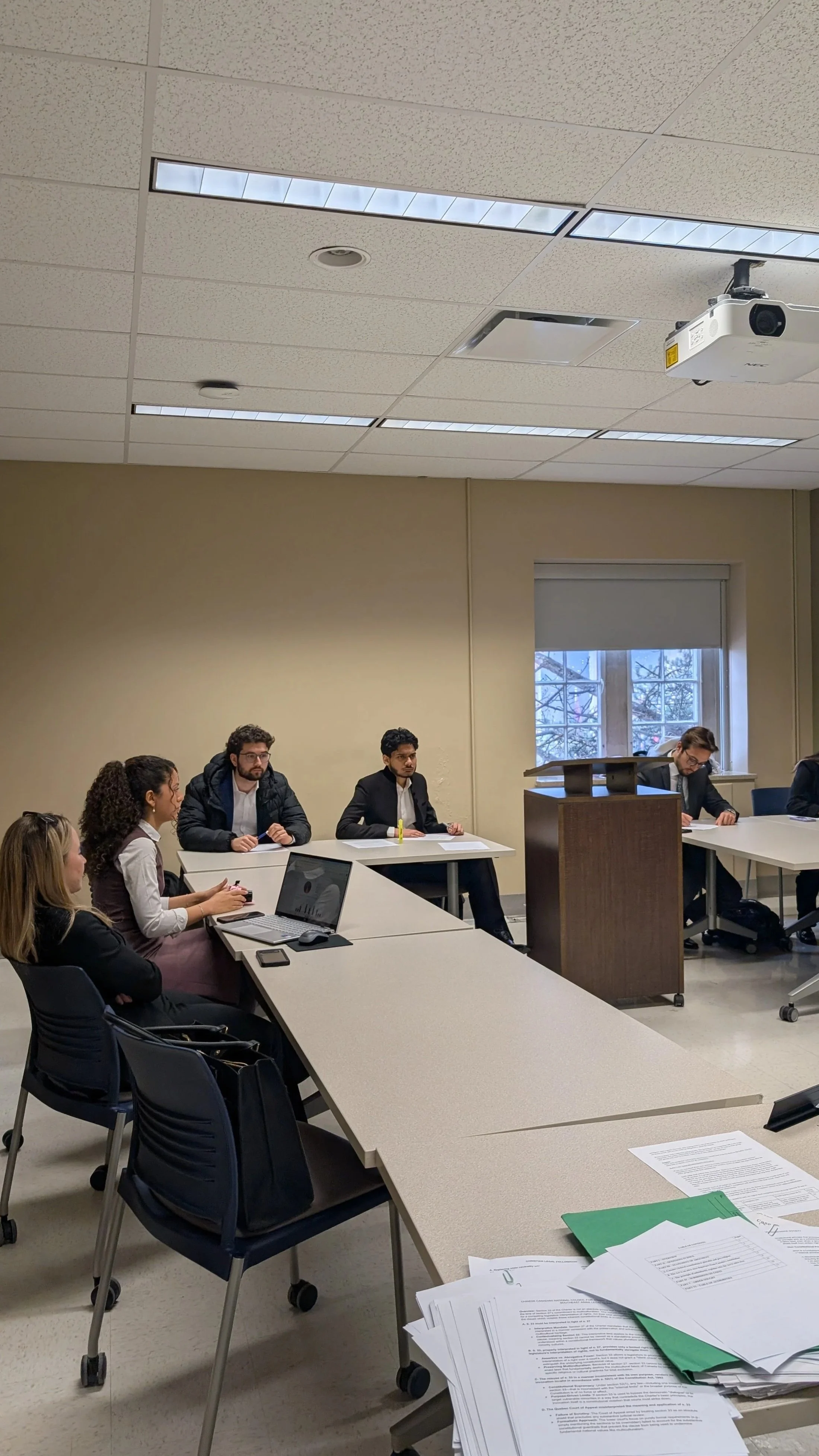
Although religious freedom seemed like the natural subject for such a competition, we quickly recognized the opportunity to go even further. There is a clear gap in Canadian public law advocacy opportunities outside of national external moots such as the Gale Cup Moot and the Laskin Moot. In conversations with the CLF national team, we identified an even more specific need: training in intervention advocacy. As noted by Derek Ross, intervenors—often referred to as amicus curiae, or “friends of the court”—play a unique and important role in the legal system, offering specialized expertise and perspectives rather than acting as adversarial parties. Given that dozens of intervenors may appear in a single case, this form of advocacy requires counsel to understand the broader landscape of arguments and advance a distinct, value-adding perspective that meaningfully assists the court.
From this idea, the Amicus Intervenor Moot was born. The name is drawn from amicus curiae—a term used to describe those who support, advise, and advocate as “friends of the court.” For CLF as a Christian organization, the concept of an “advocate friend” also serves as an homage to the Holy Spirit, described as our “Paraclete”: a guide, companion, counselor, intercessor, and advocate. The competition’s mission is to inspire law students to embody these same qualities: to support with integrity, to advise with wisdom, and to advocate in a spirit of thoughtful intercession.
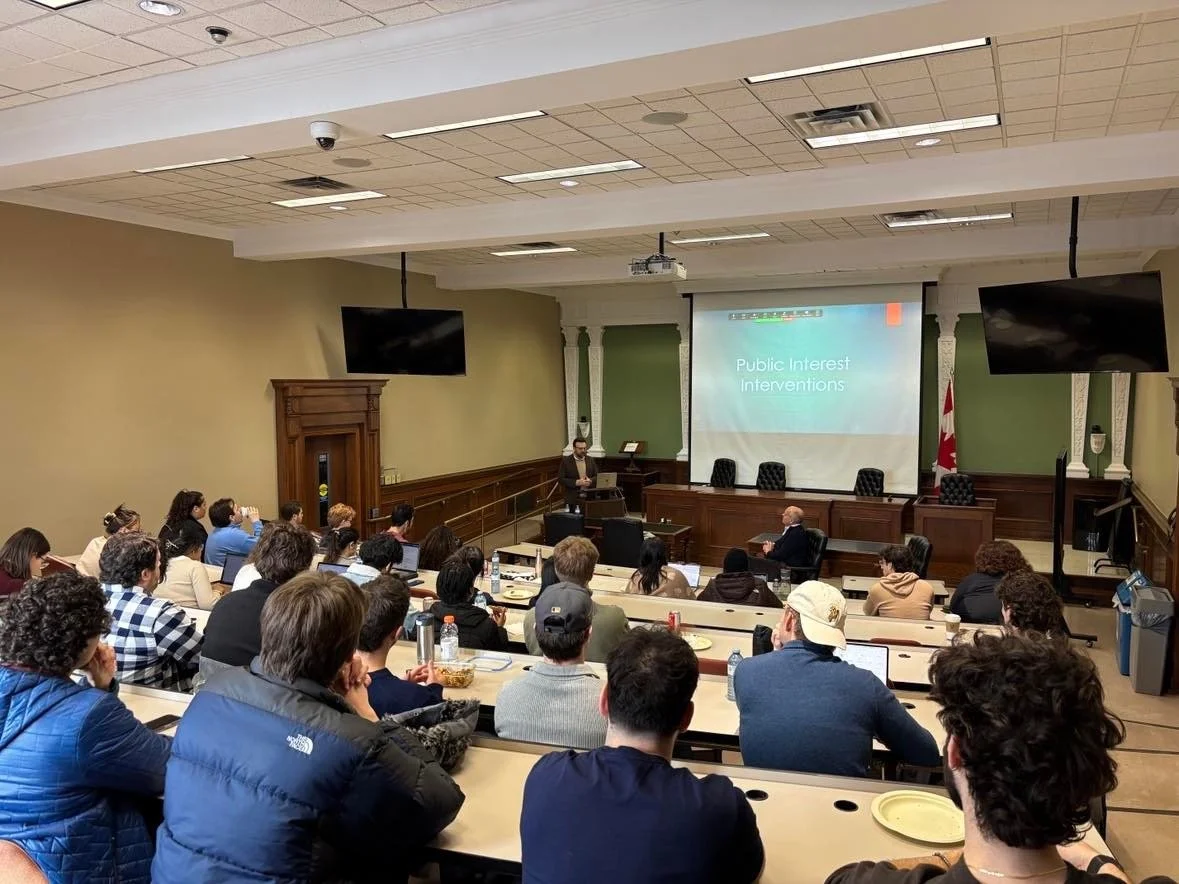

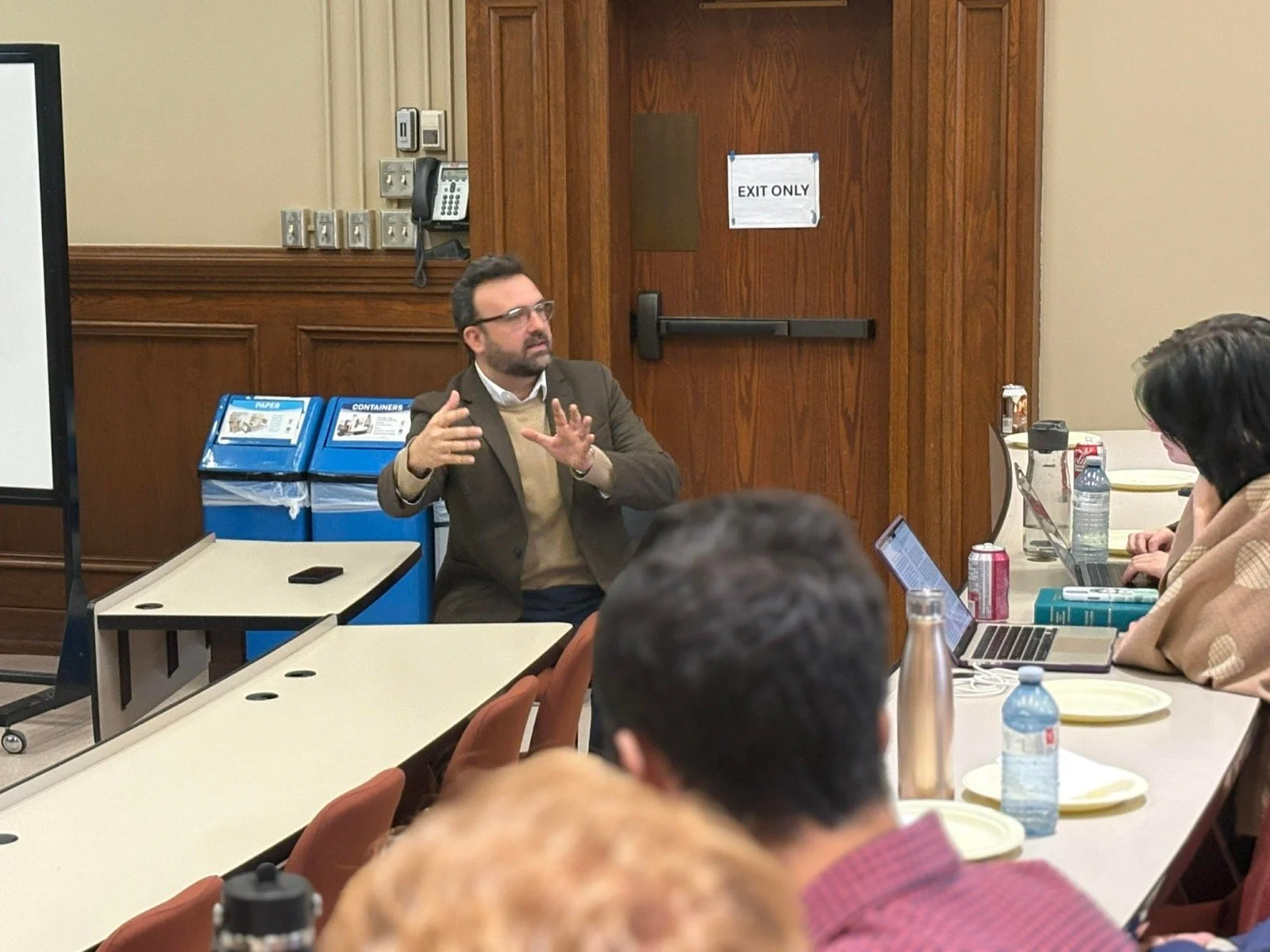
In launching the moot, we wanted to select a case that was both timely and impactful, one that would generate meaningful discussion and engagement. We found the ideal fit in the English Montreal School Board v Quebec (Bill 21) case. Not only does this case raise significant questions about secularism and religious freedom in Canada, but CLF itself is actively involved as an intervenor, having recently submitted its factum. We decided to give each competitor a unique intervenor’s factum to base their oral arguments from. This gave competitors the unique opportunity to engage with live, evolving constitutional issues and to step into the role of intervenors in a real-world context.
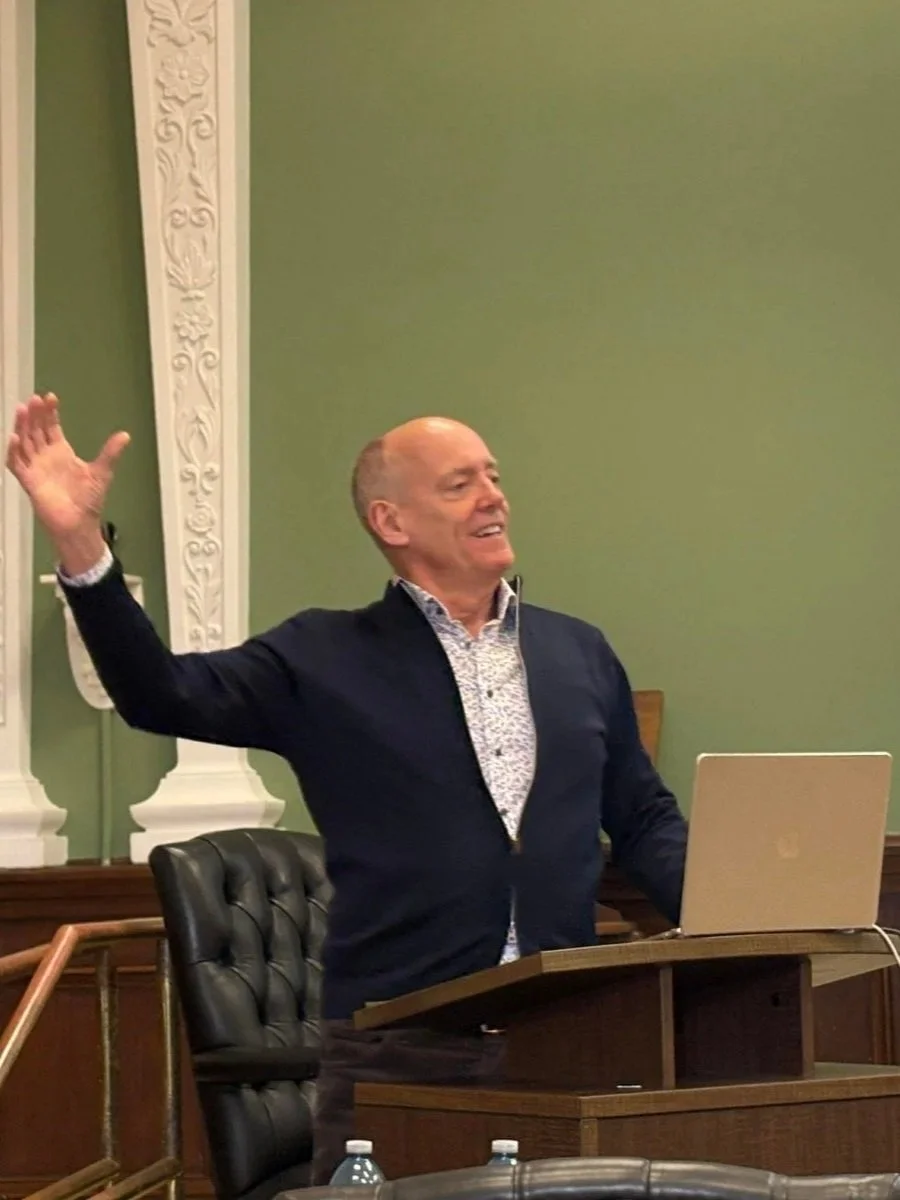
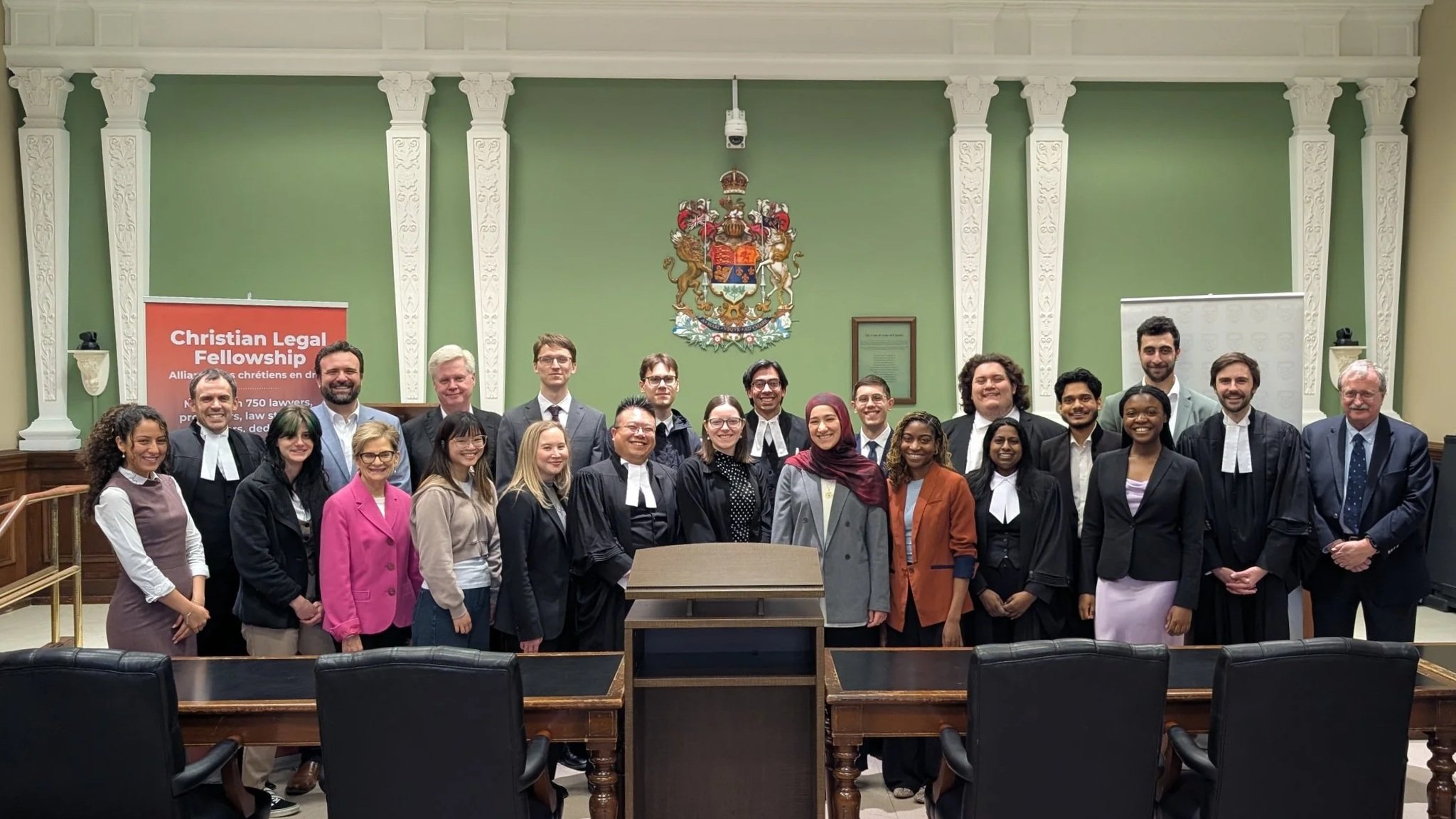
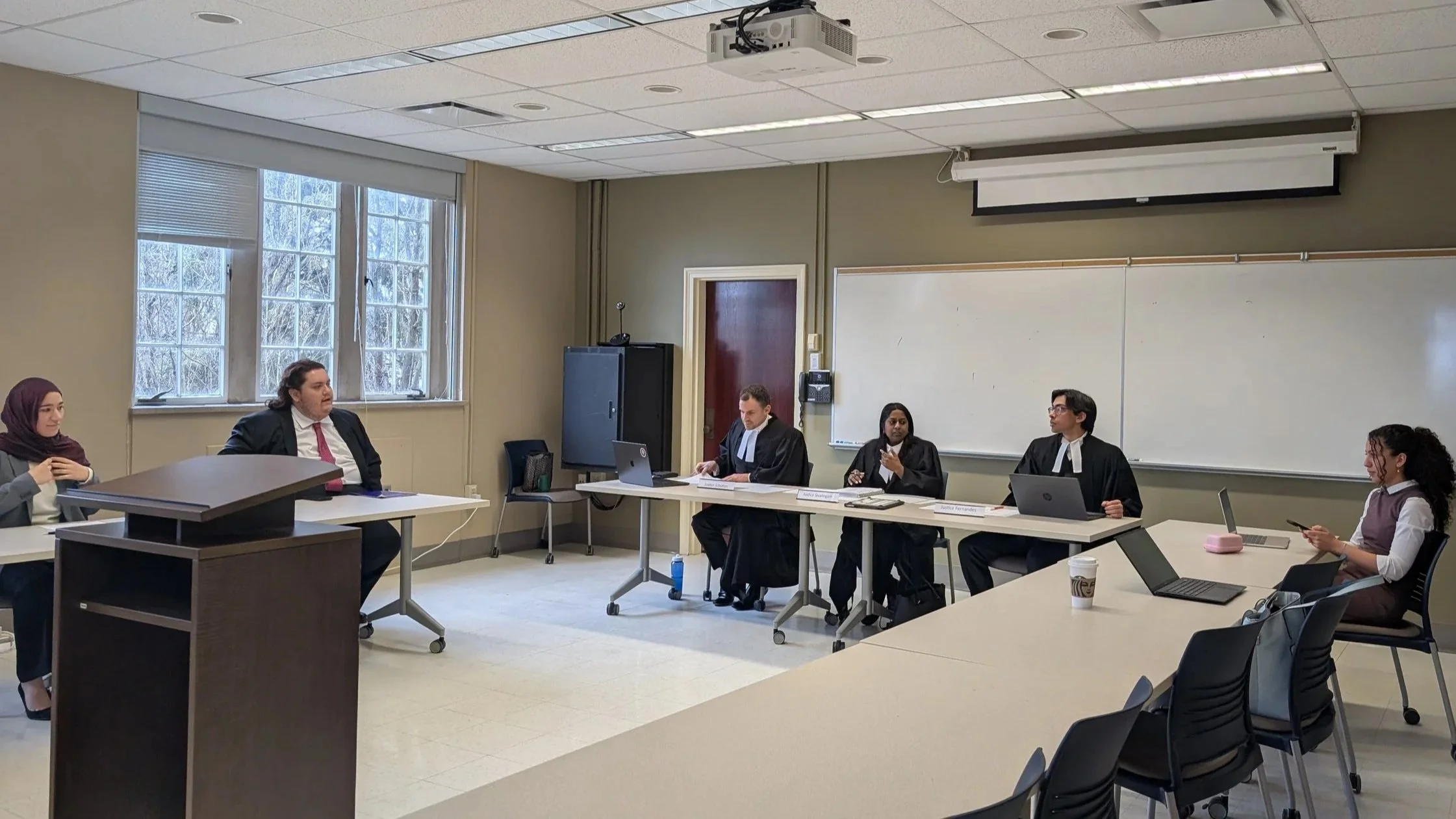
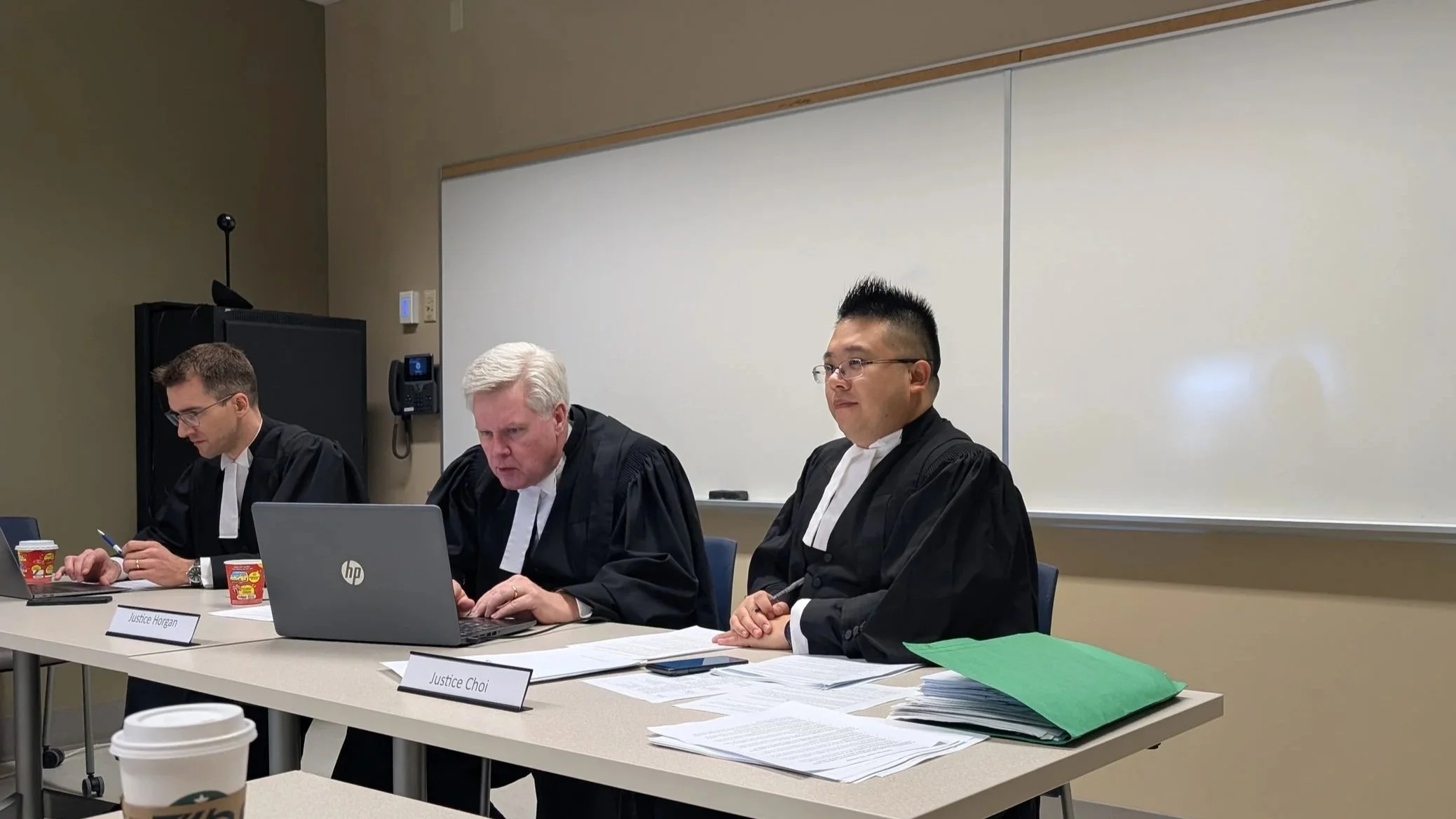
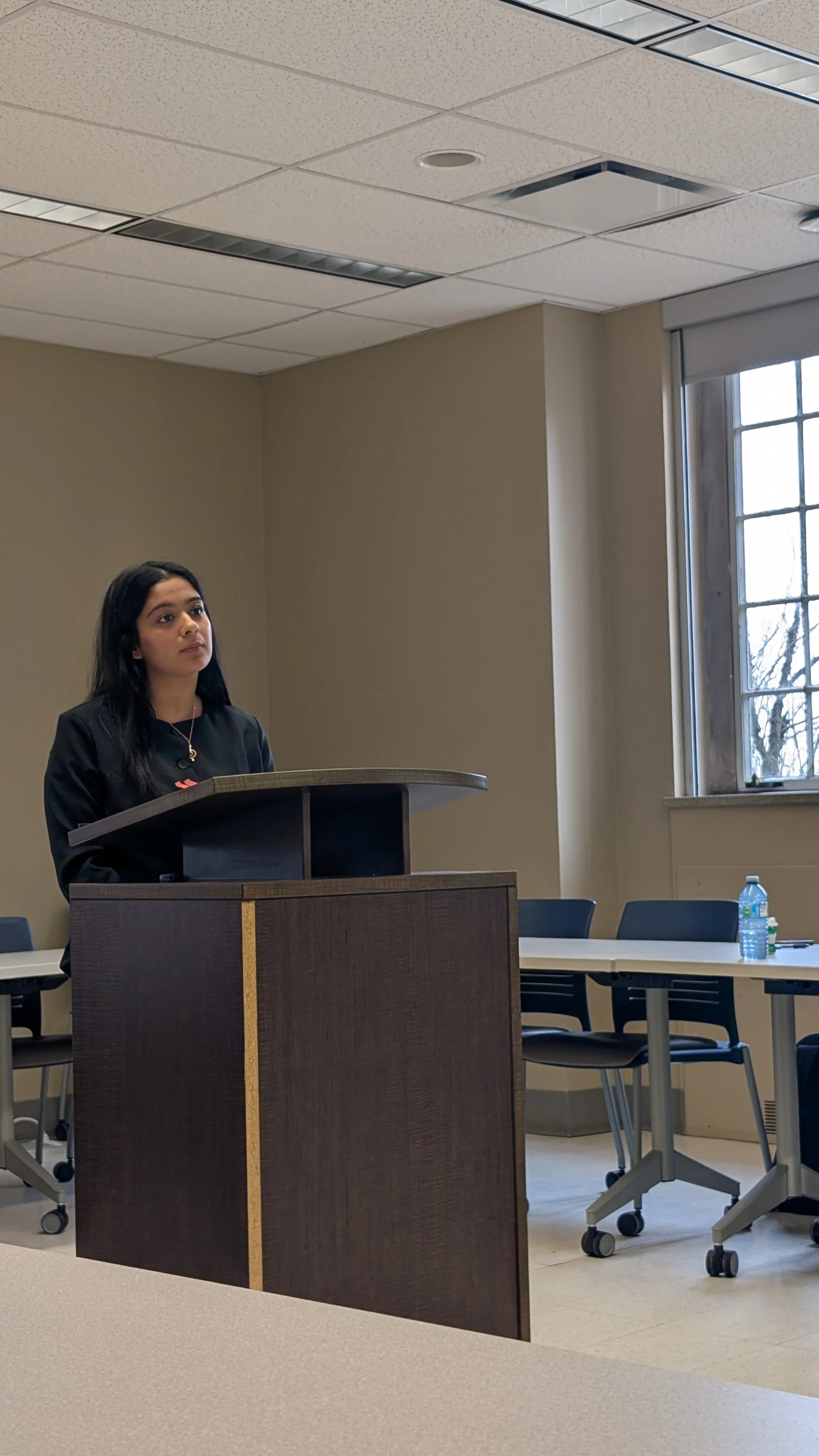
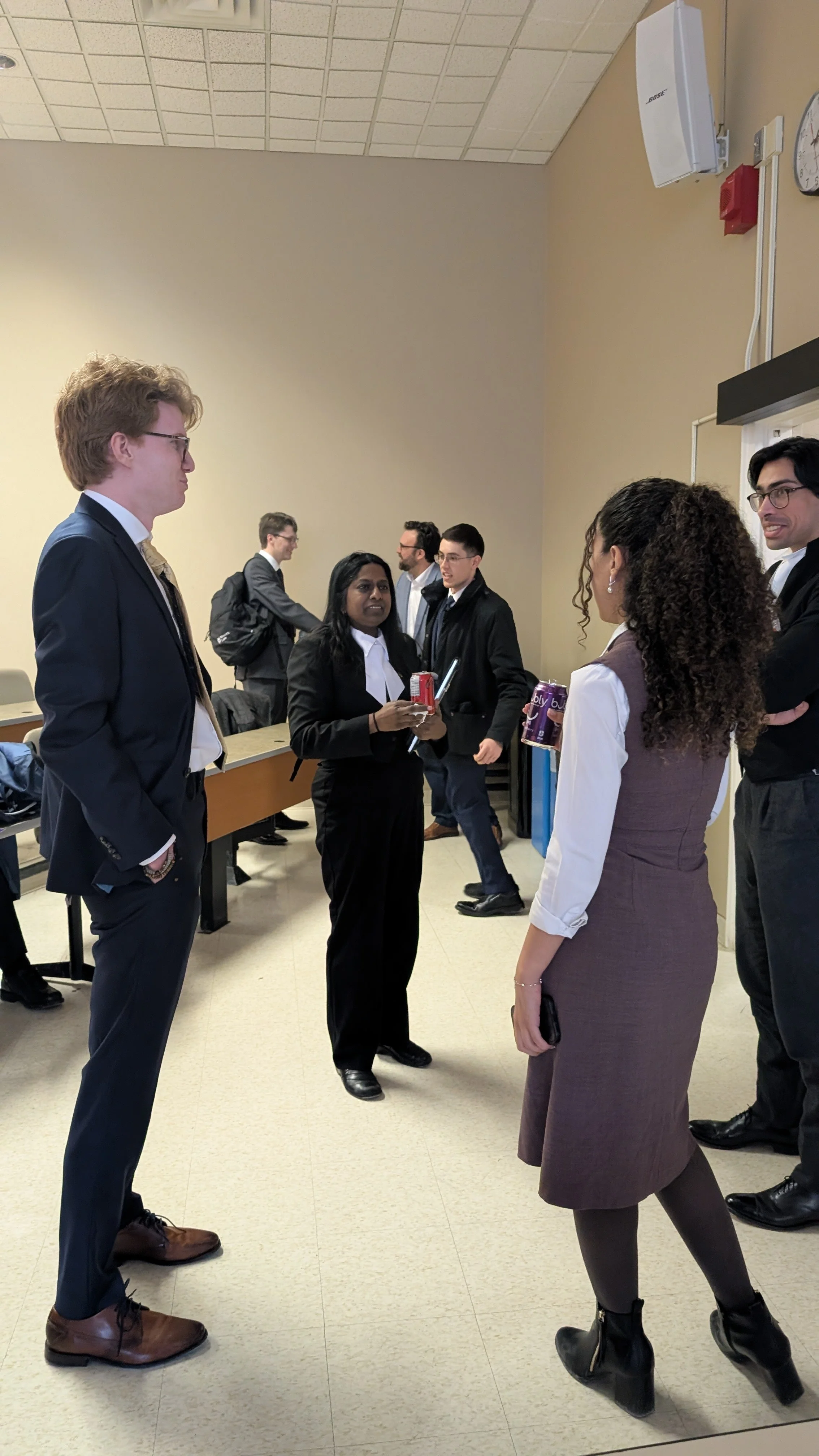
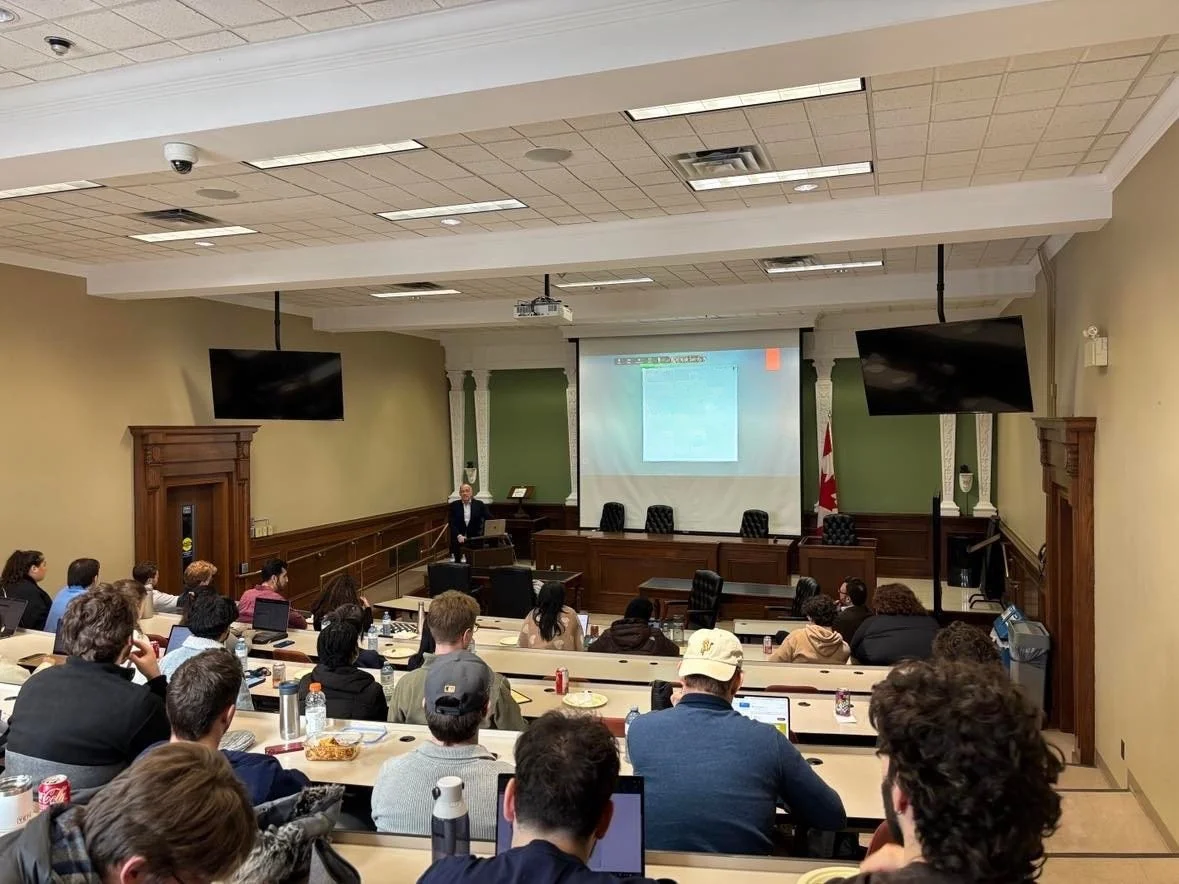
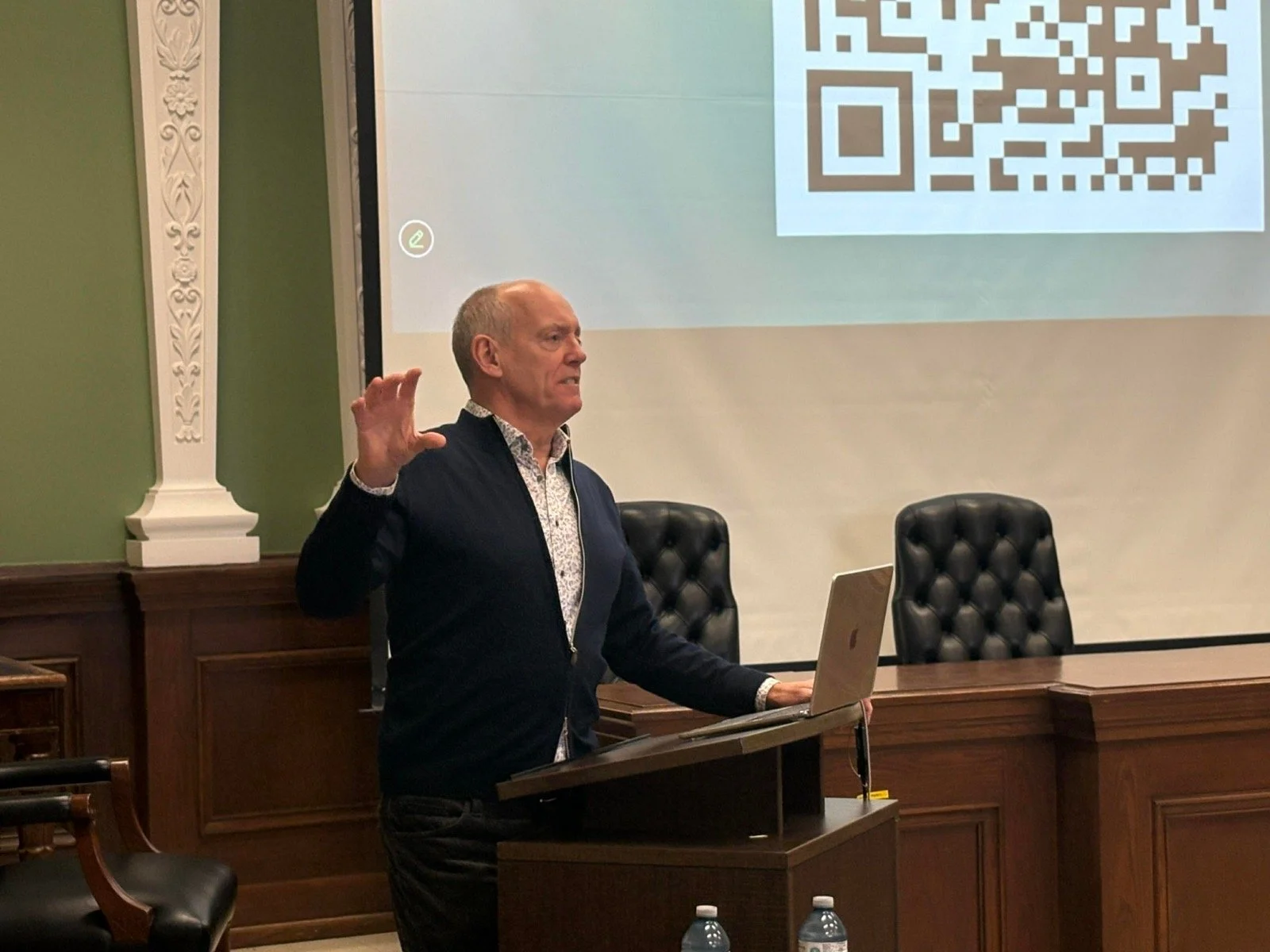
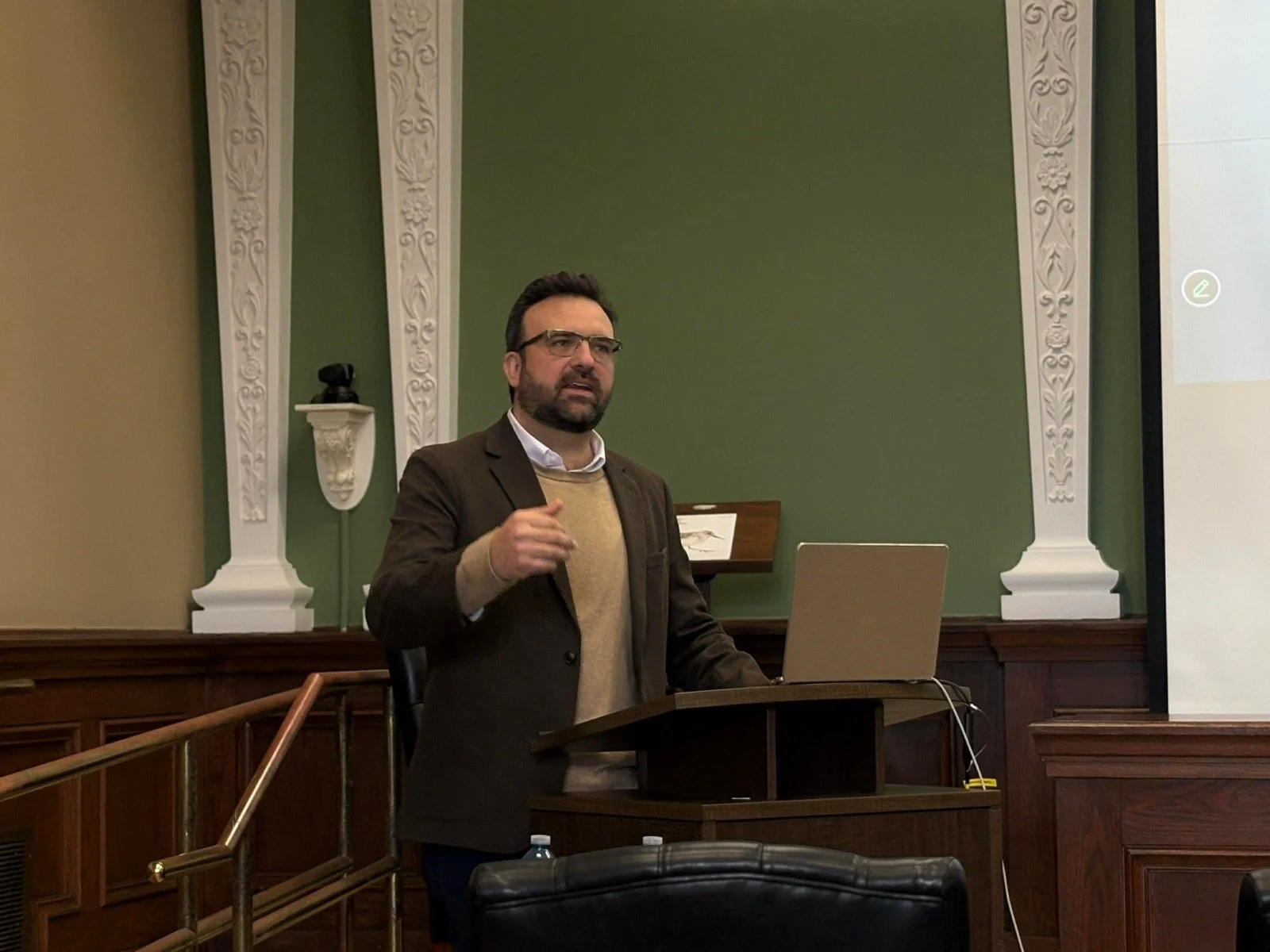
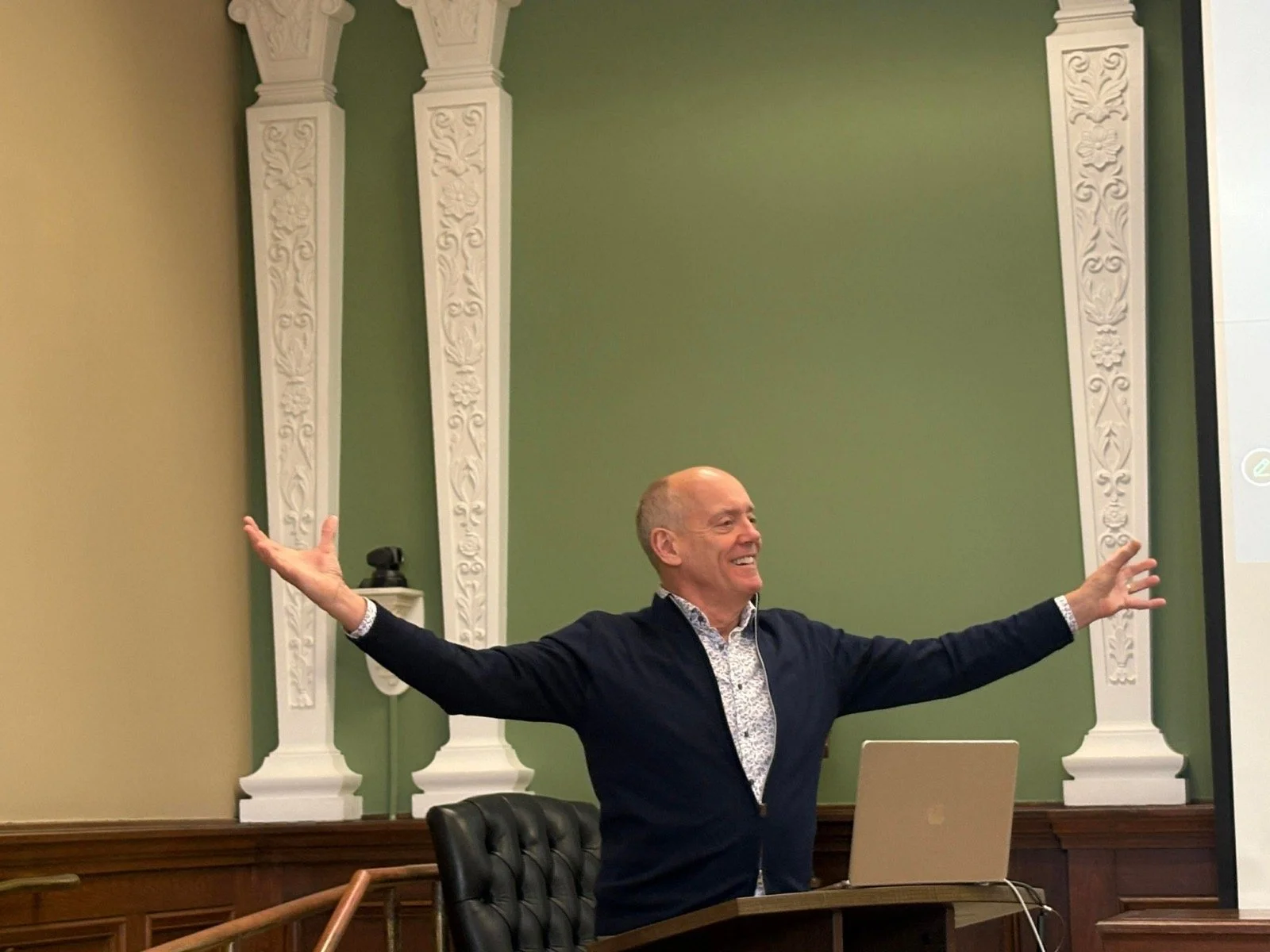
In its inaugural year, the Amicus Moot has exceeded our expectations. We welcomed 20 competitors from three law schools, all of whom demonstrated strong advocacy and thoughtful engagement with complex legal issues. In the lead-up to the competition, we hosted a workshop on intervention advocacy with Justice Grant Huscroft of the Ontario Court of Appeal, which drew an audience of 50 students eager to learn more about this distinct form of advocacy. We were also fortunate to have an exceptional group of judges, including individuals who had themselves acted as intervenors in the case, representing diverse organizations.
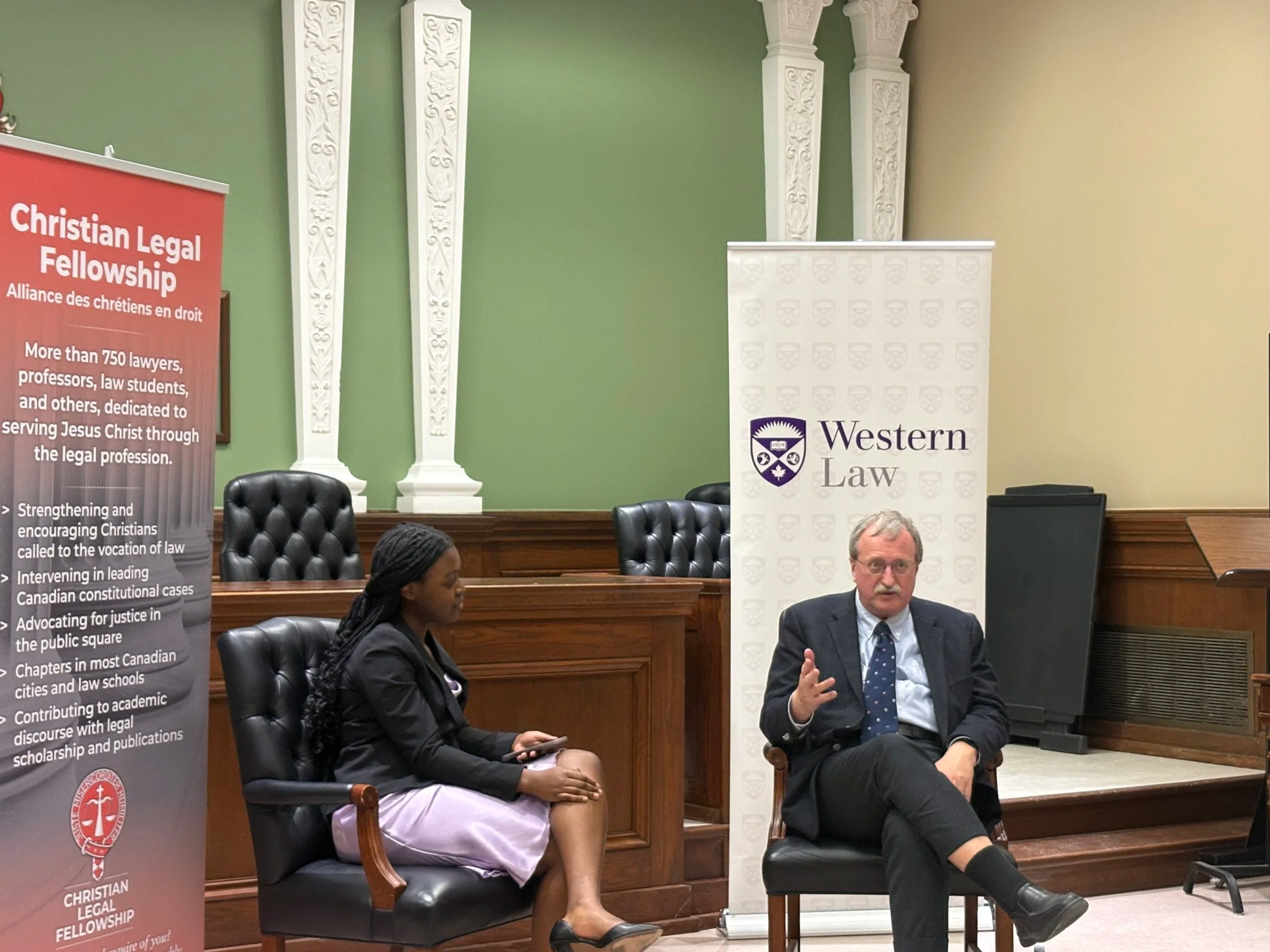
The final round was a particular highlight. We had the honour of welcoming Justice David Brown, whose engaging and dynamic “hot bench” pushed competitors to think critically and respond with precision. Following the round, he continued the conversation in a fireside chat, offering invaluable insights into appellate advocacy and the role of intervenors before the court.
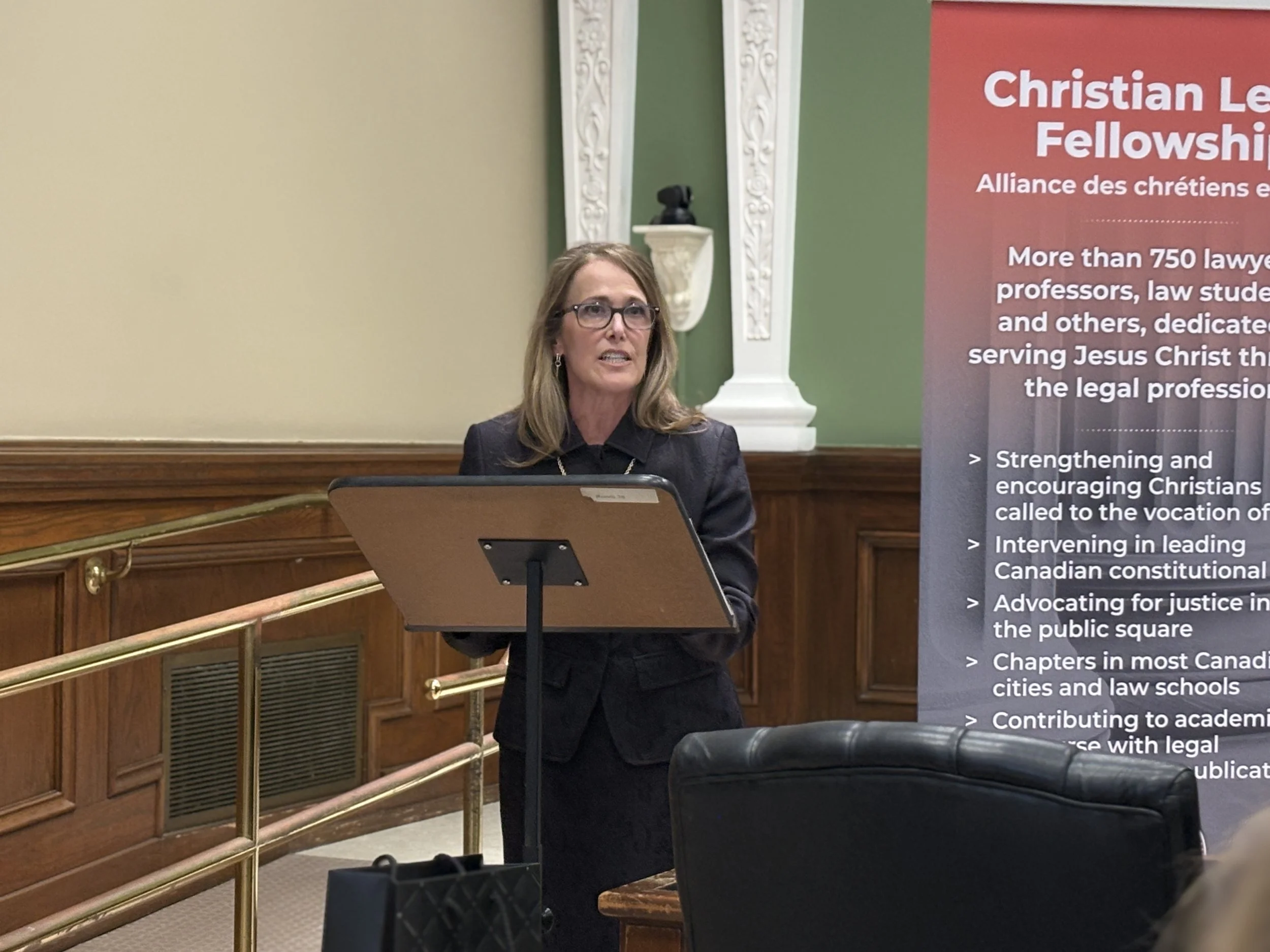
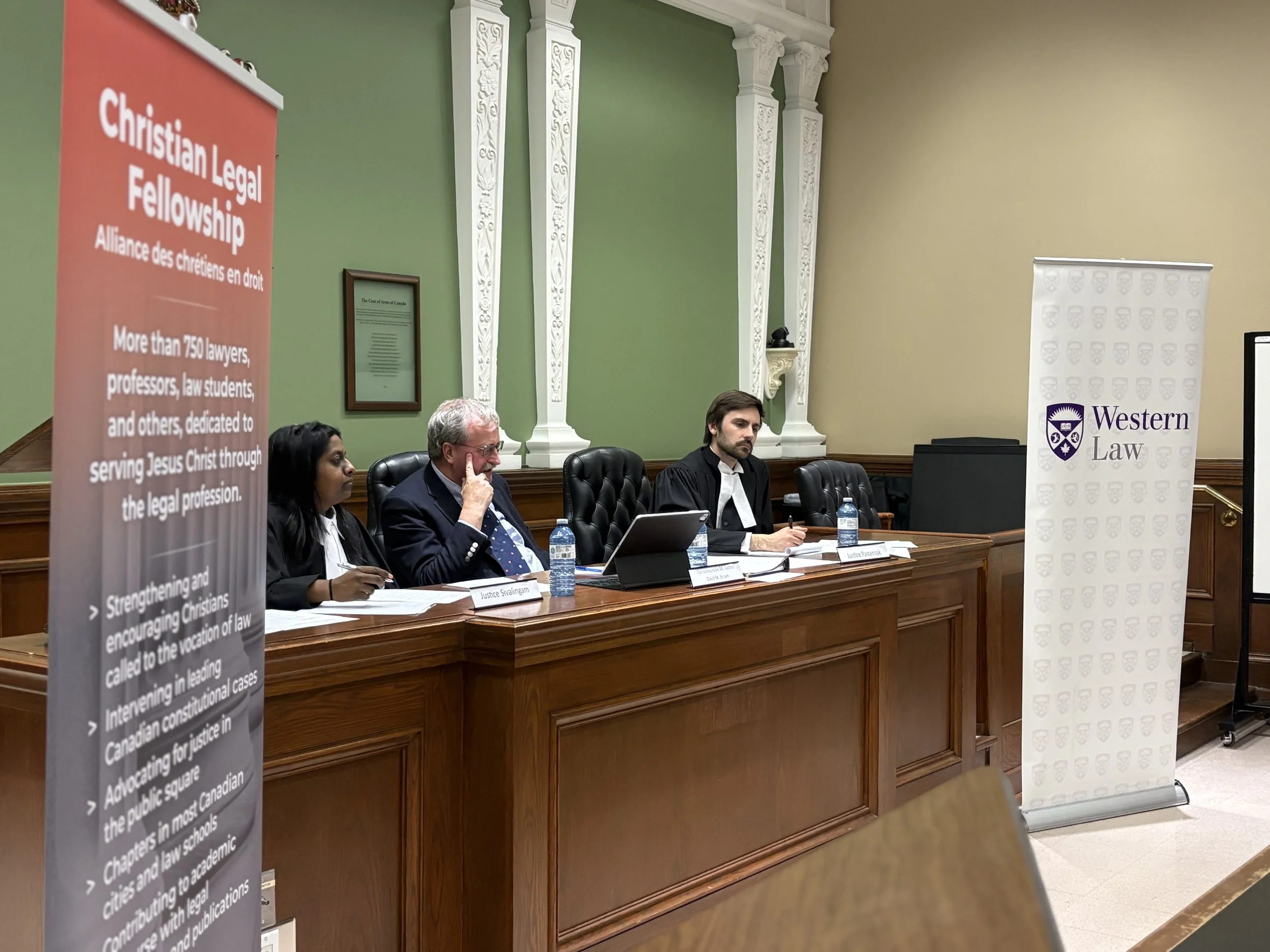
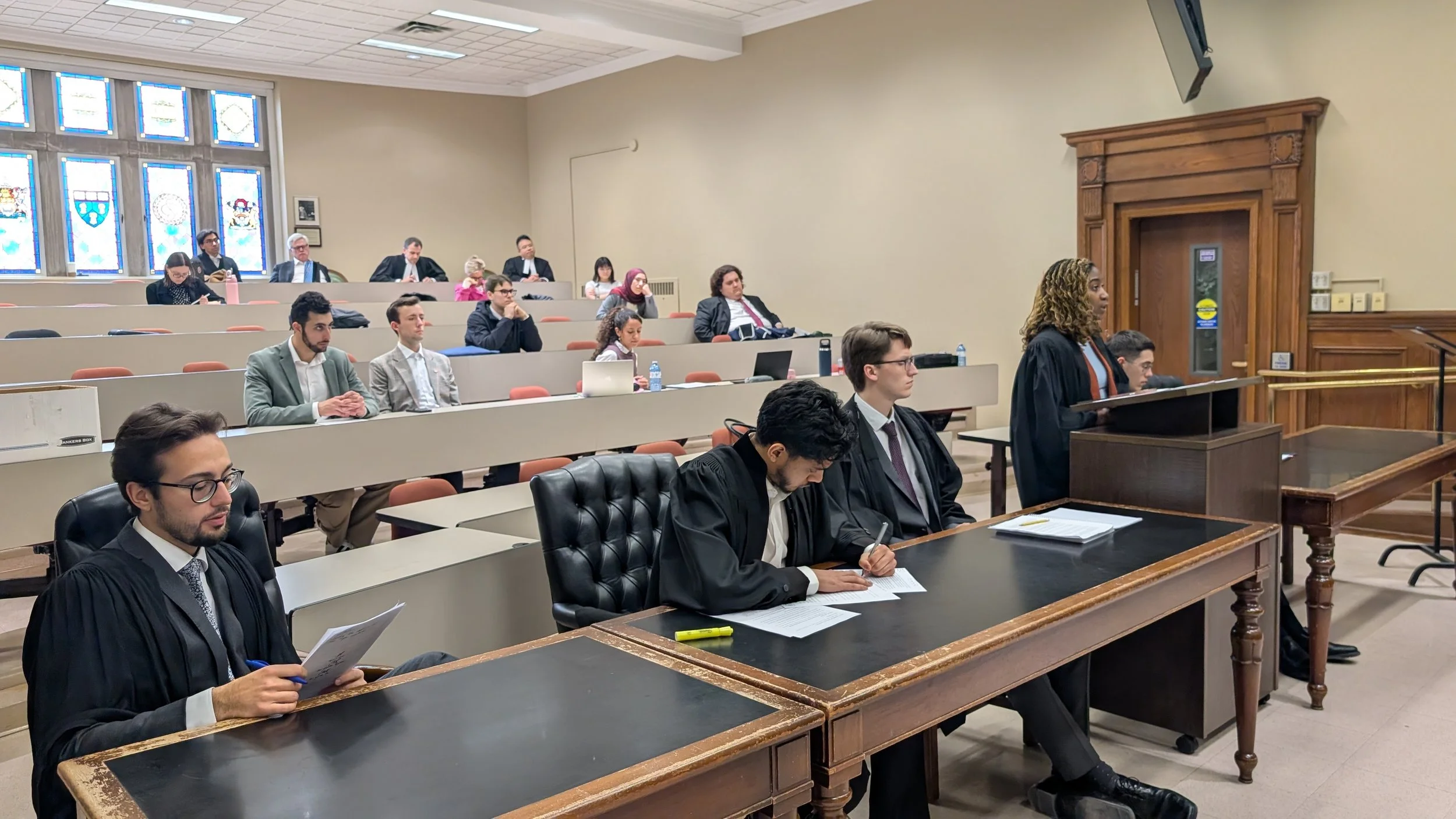
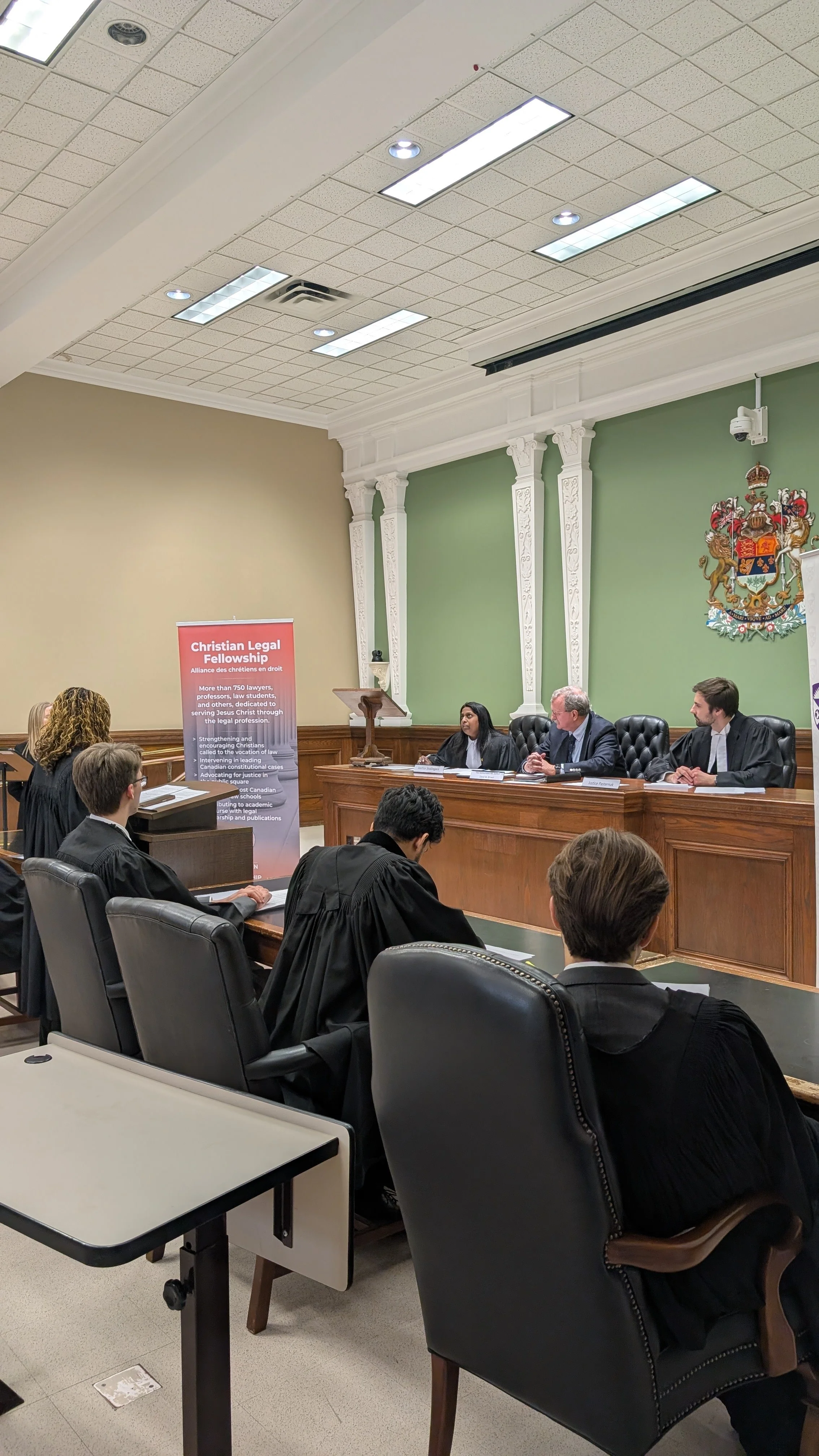
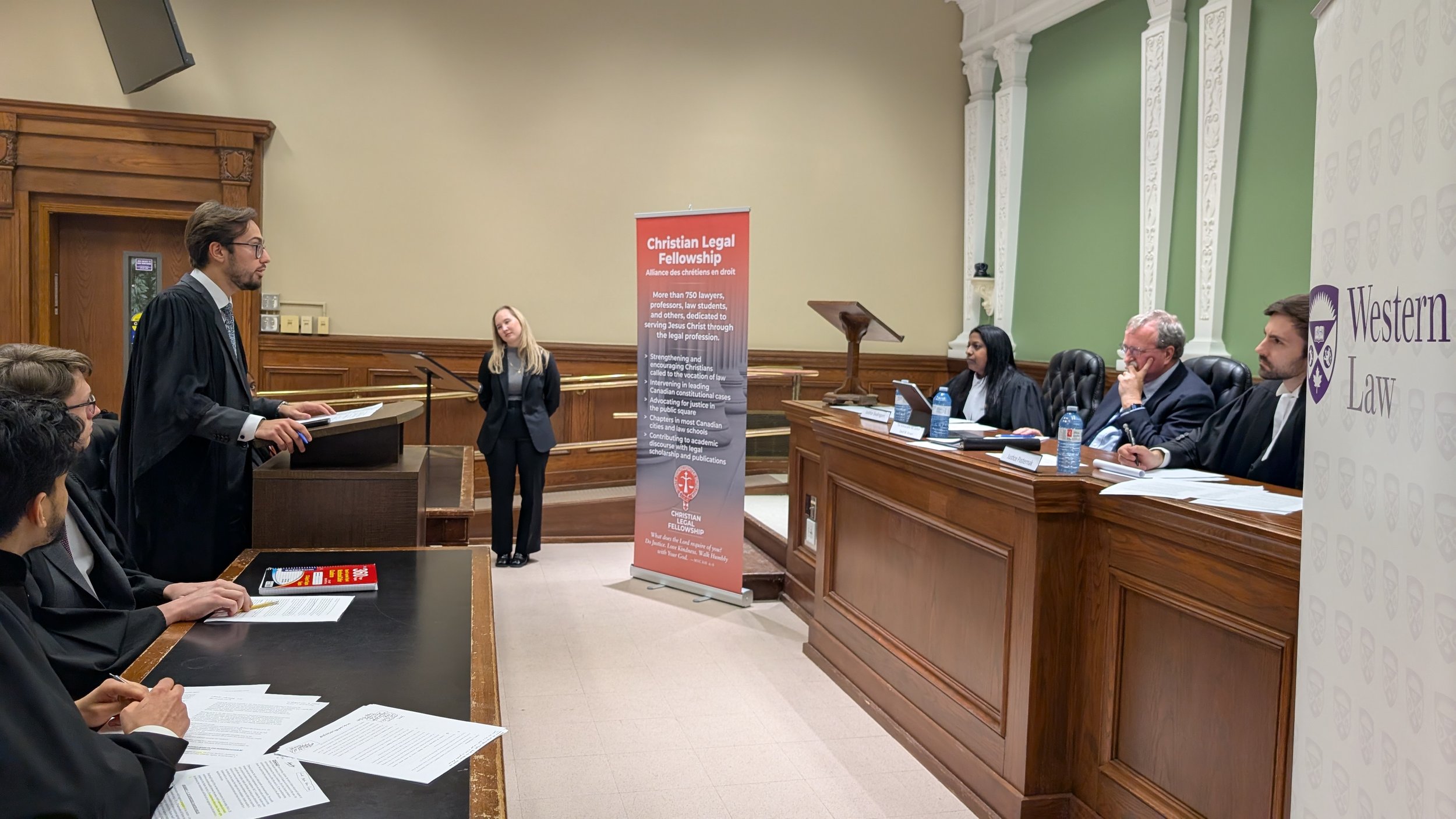
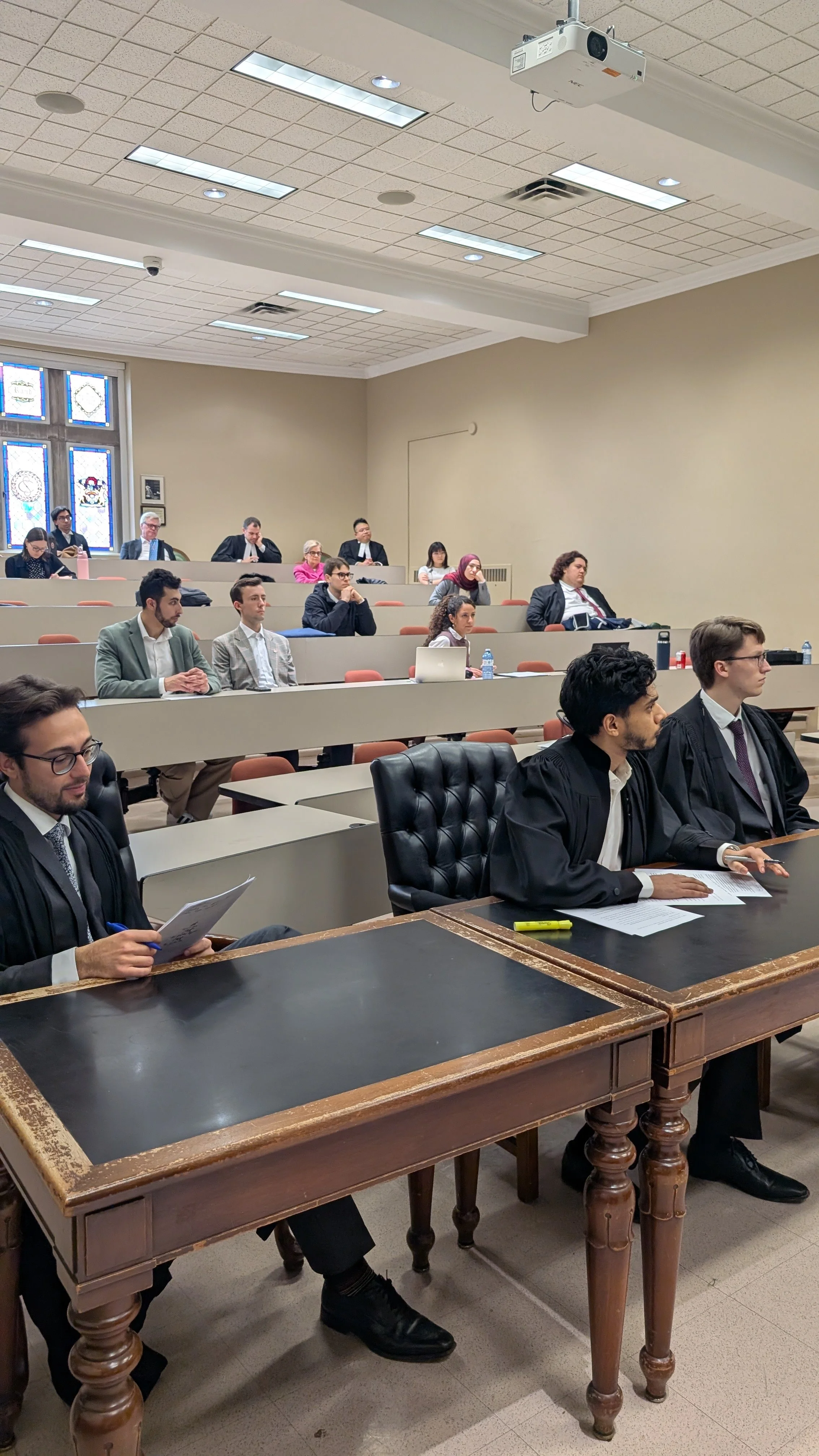
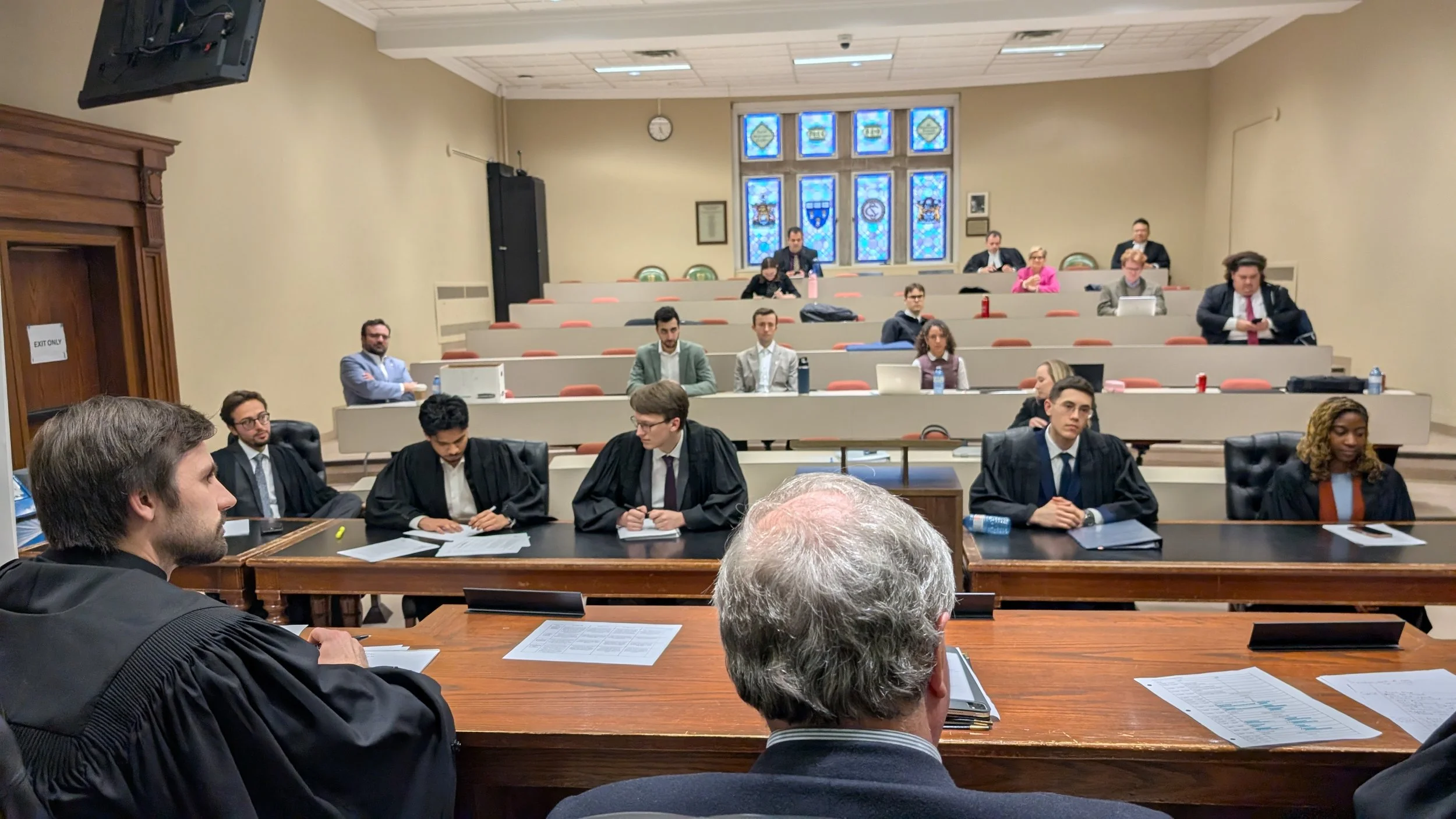
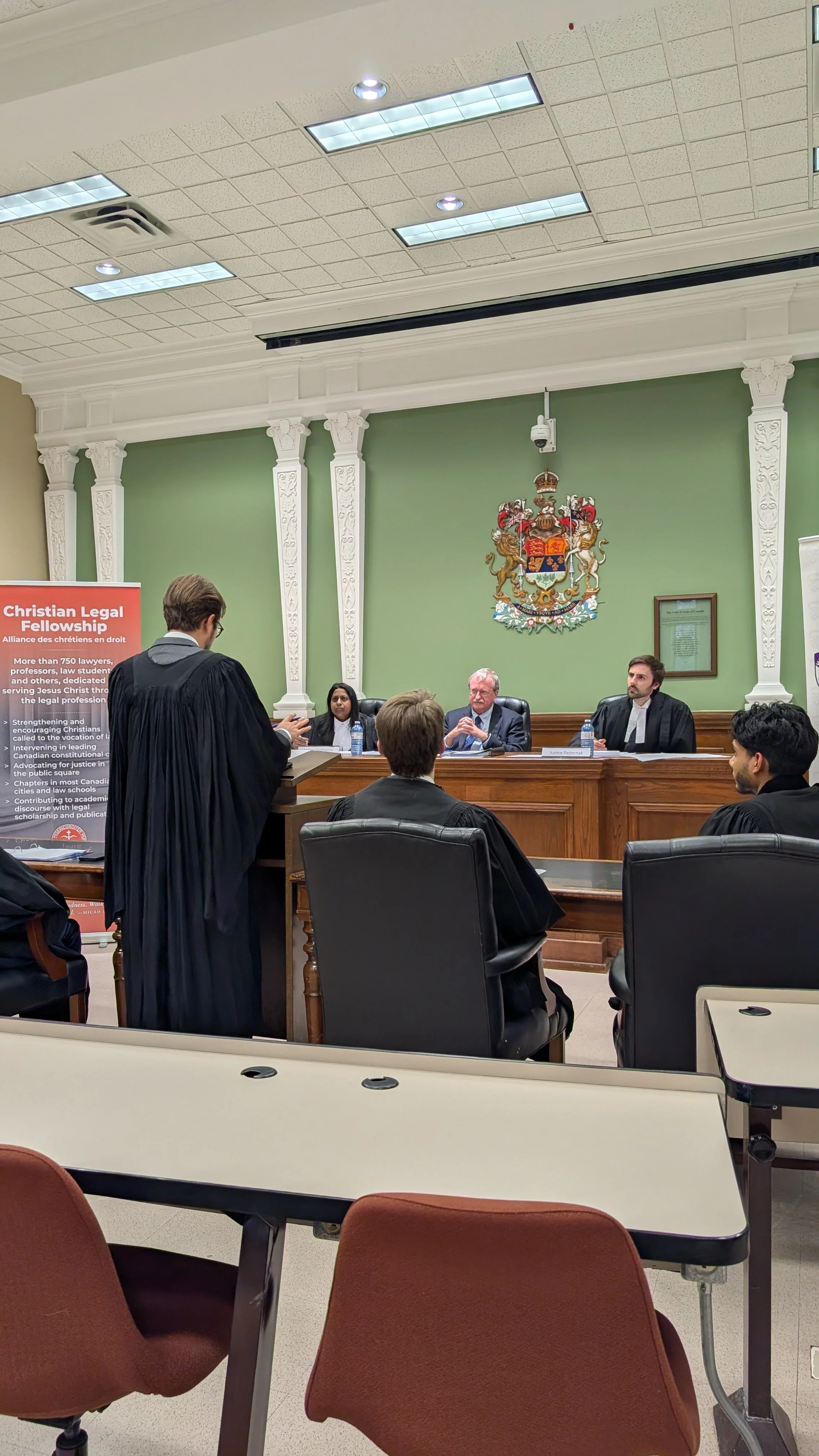
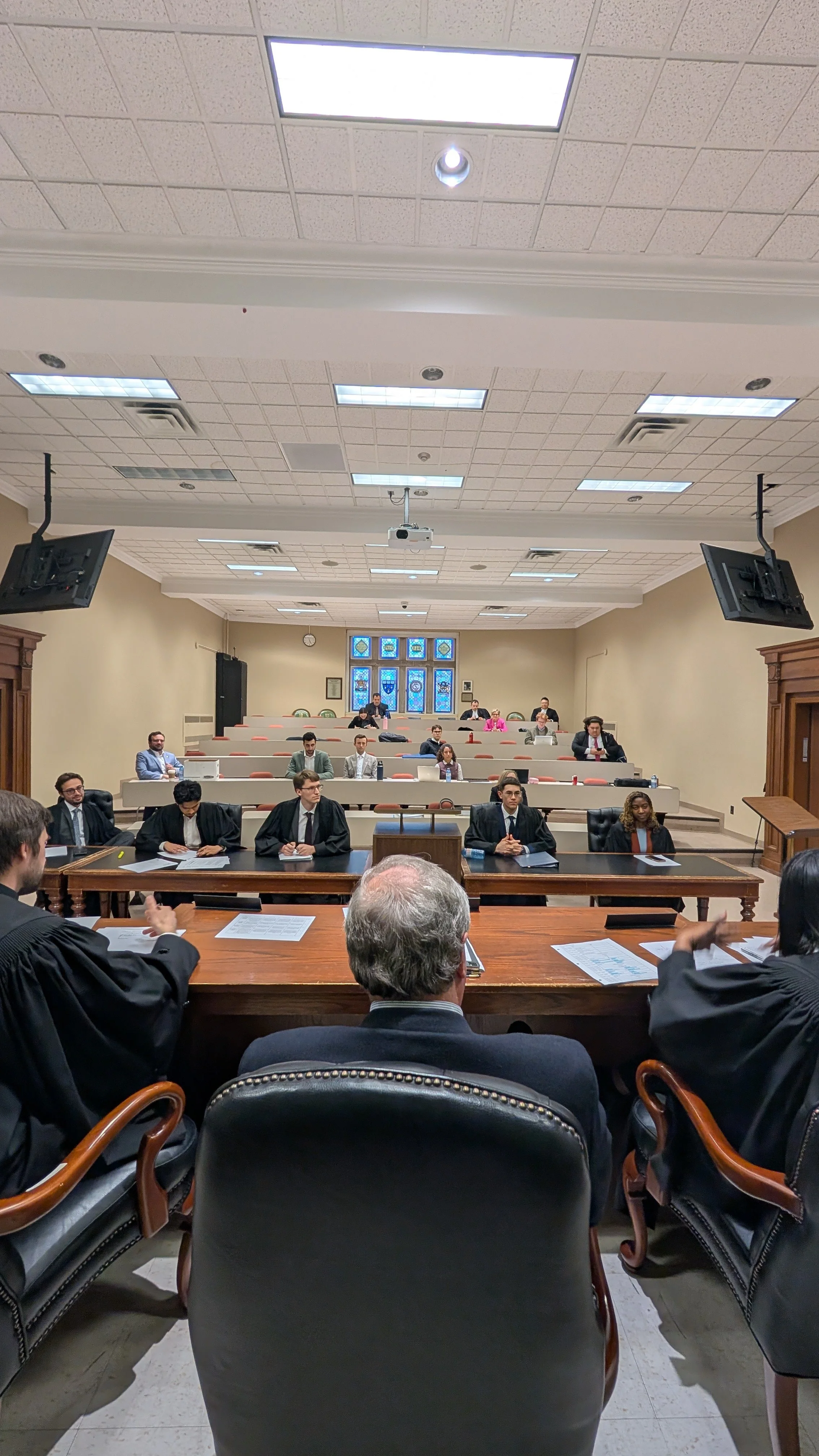
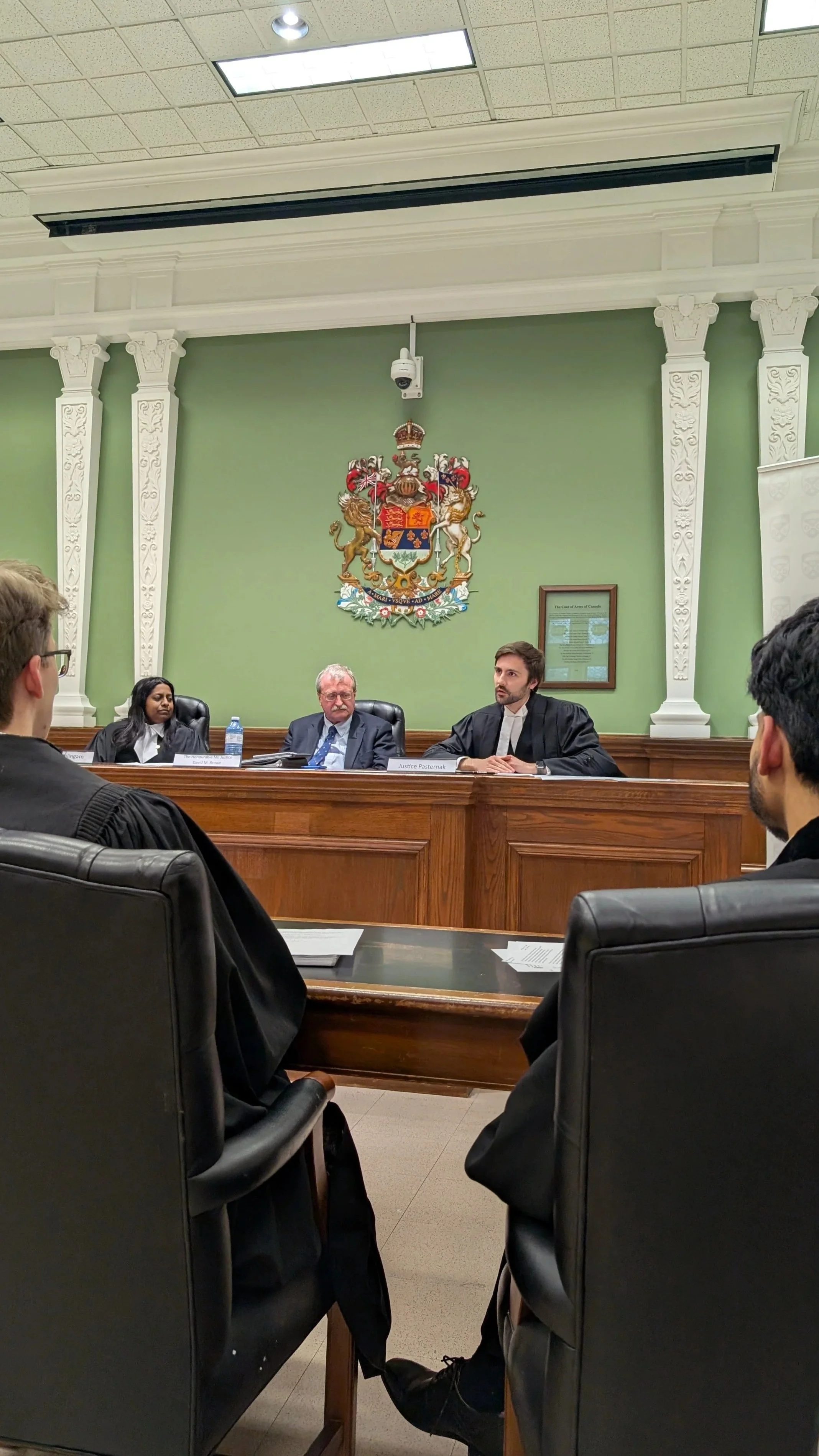
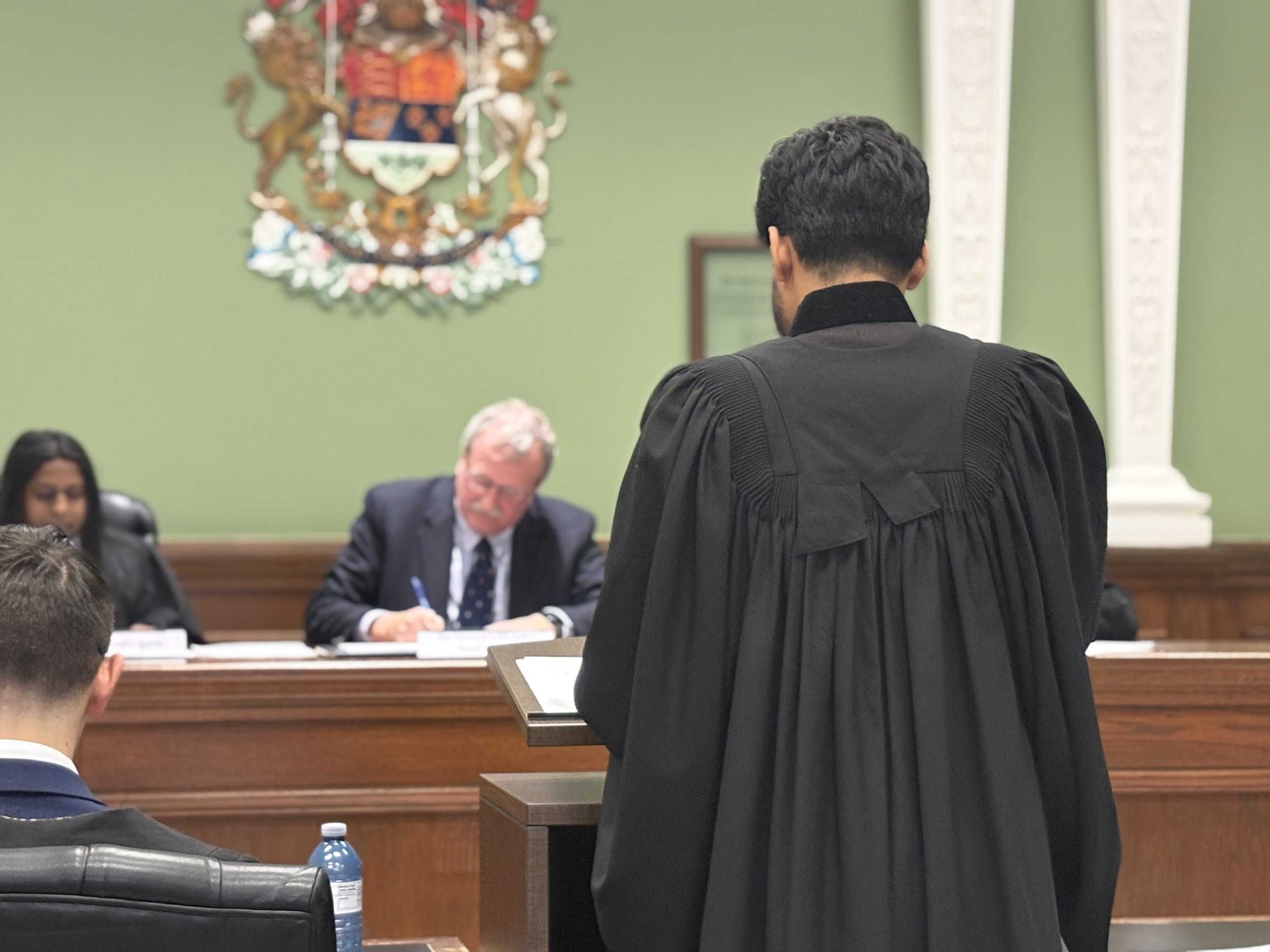
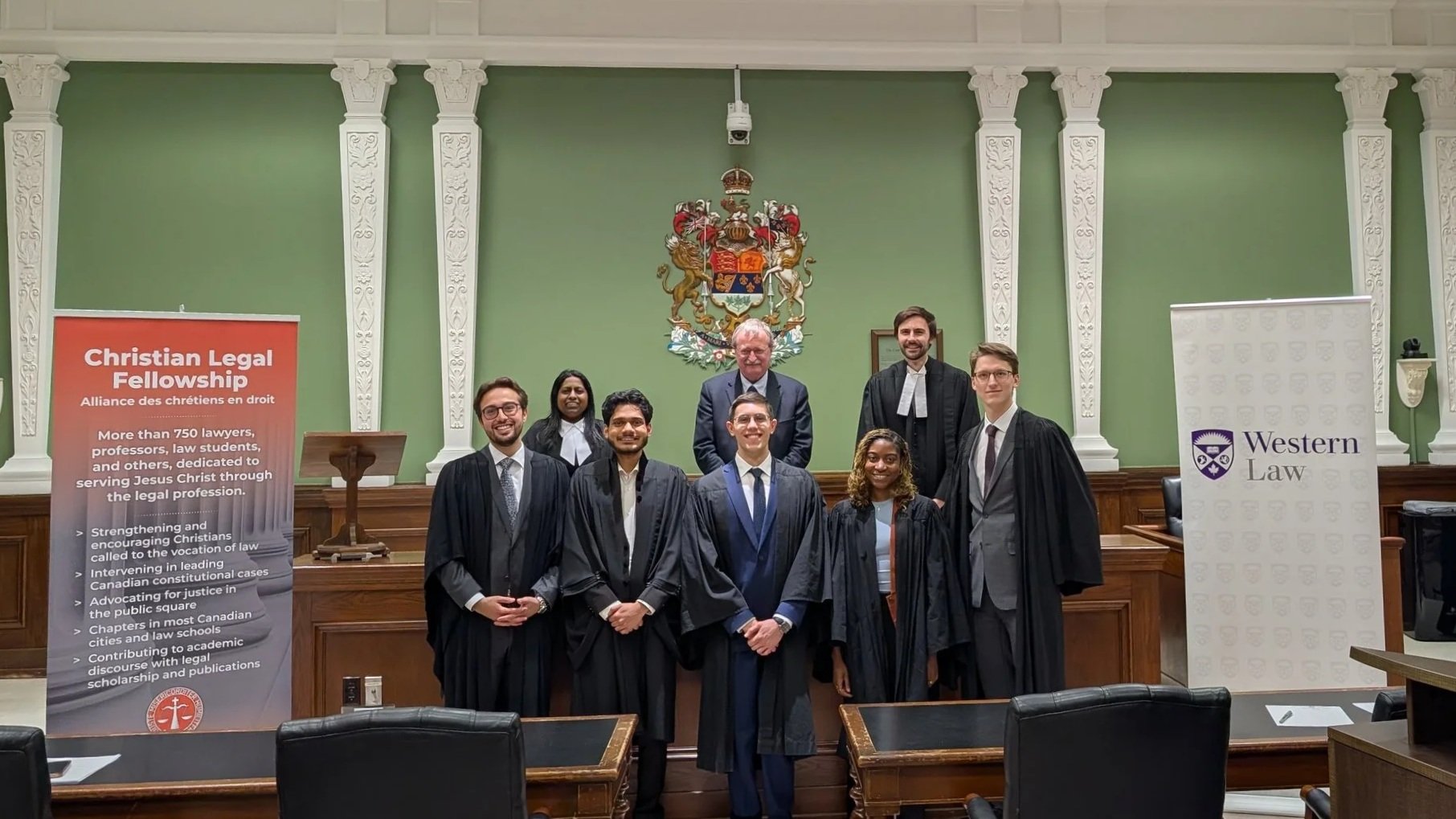
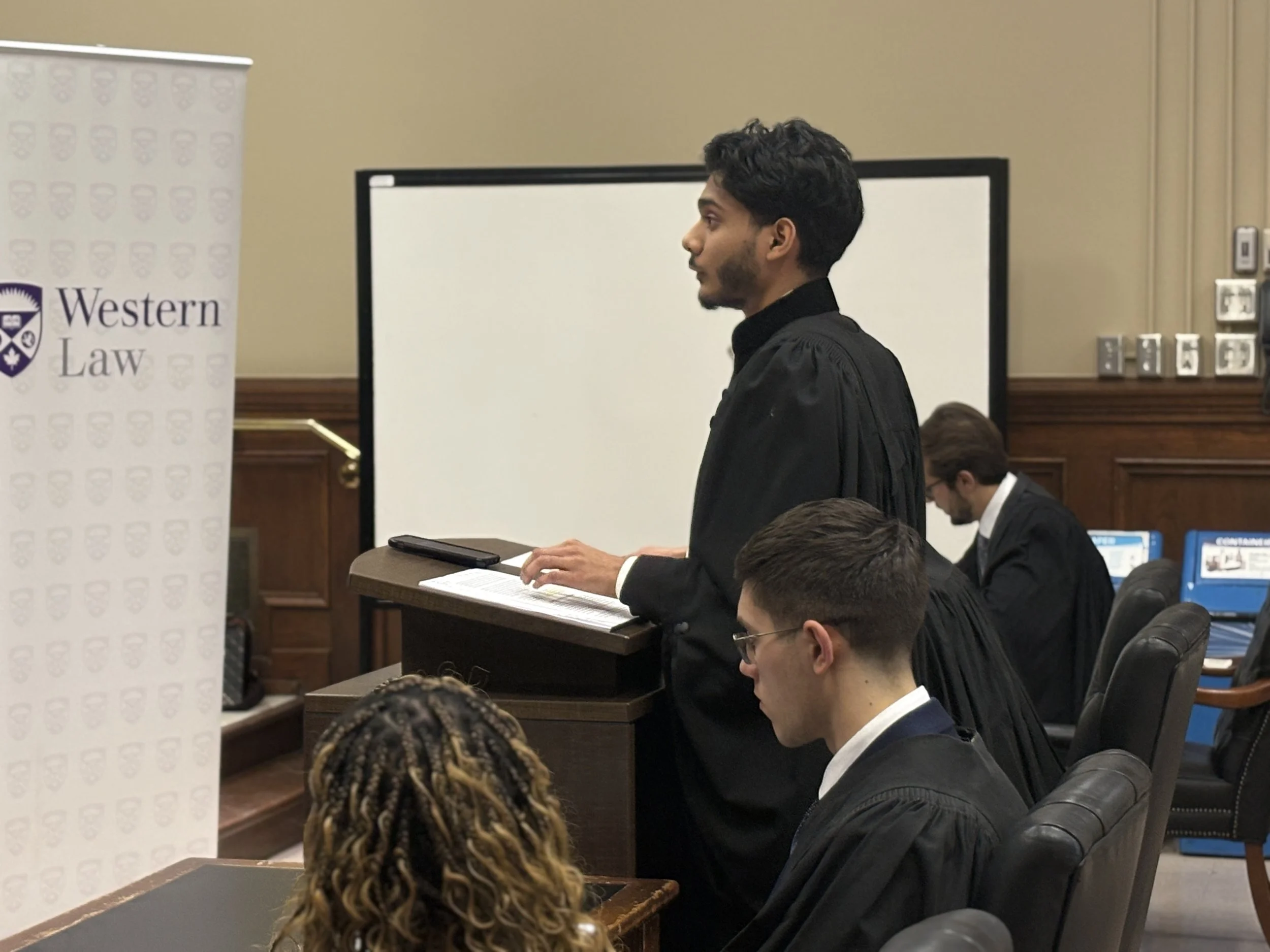
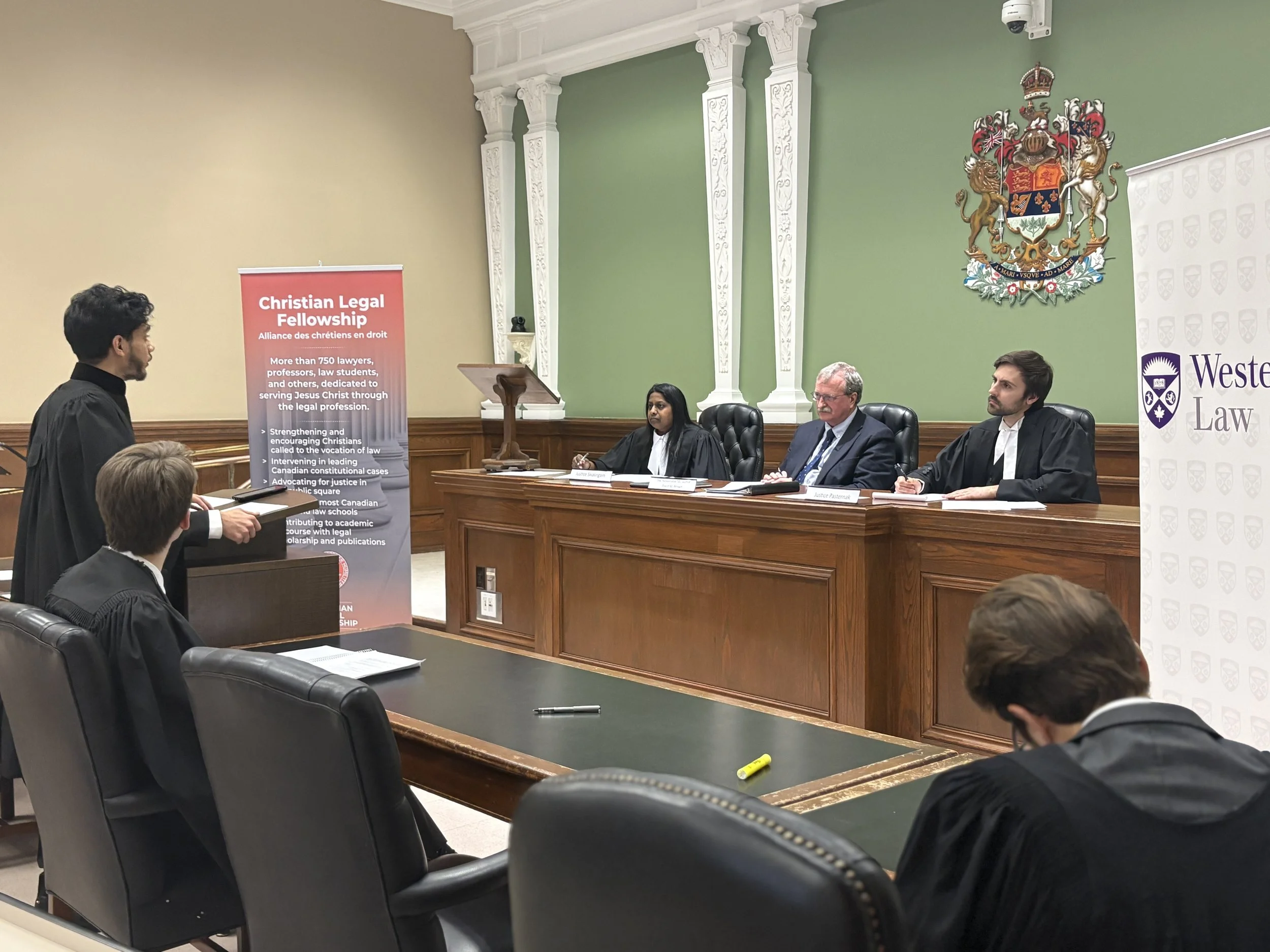
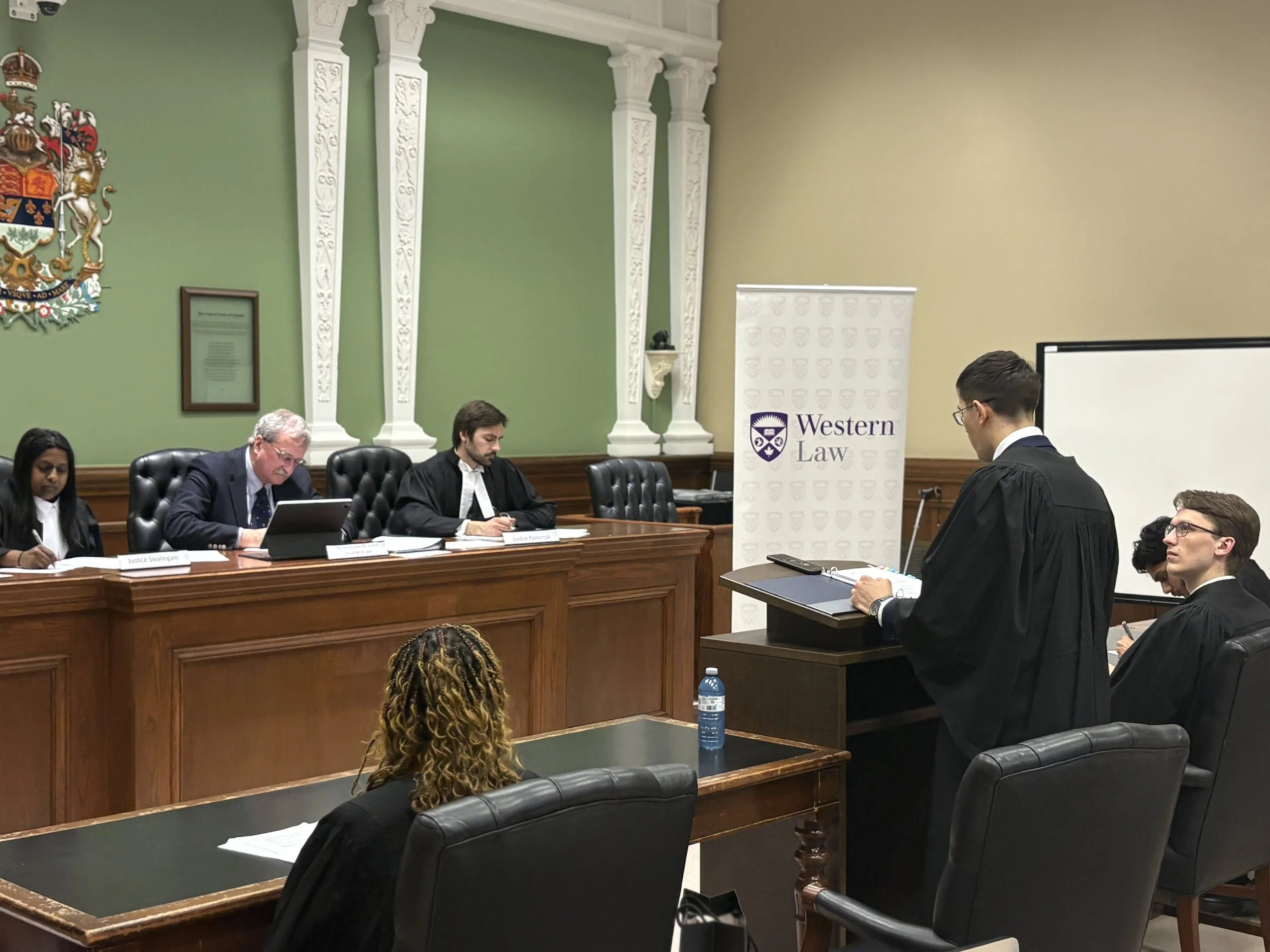
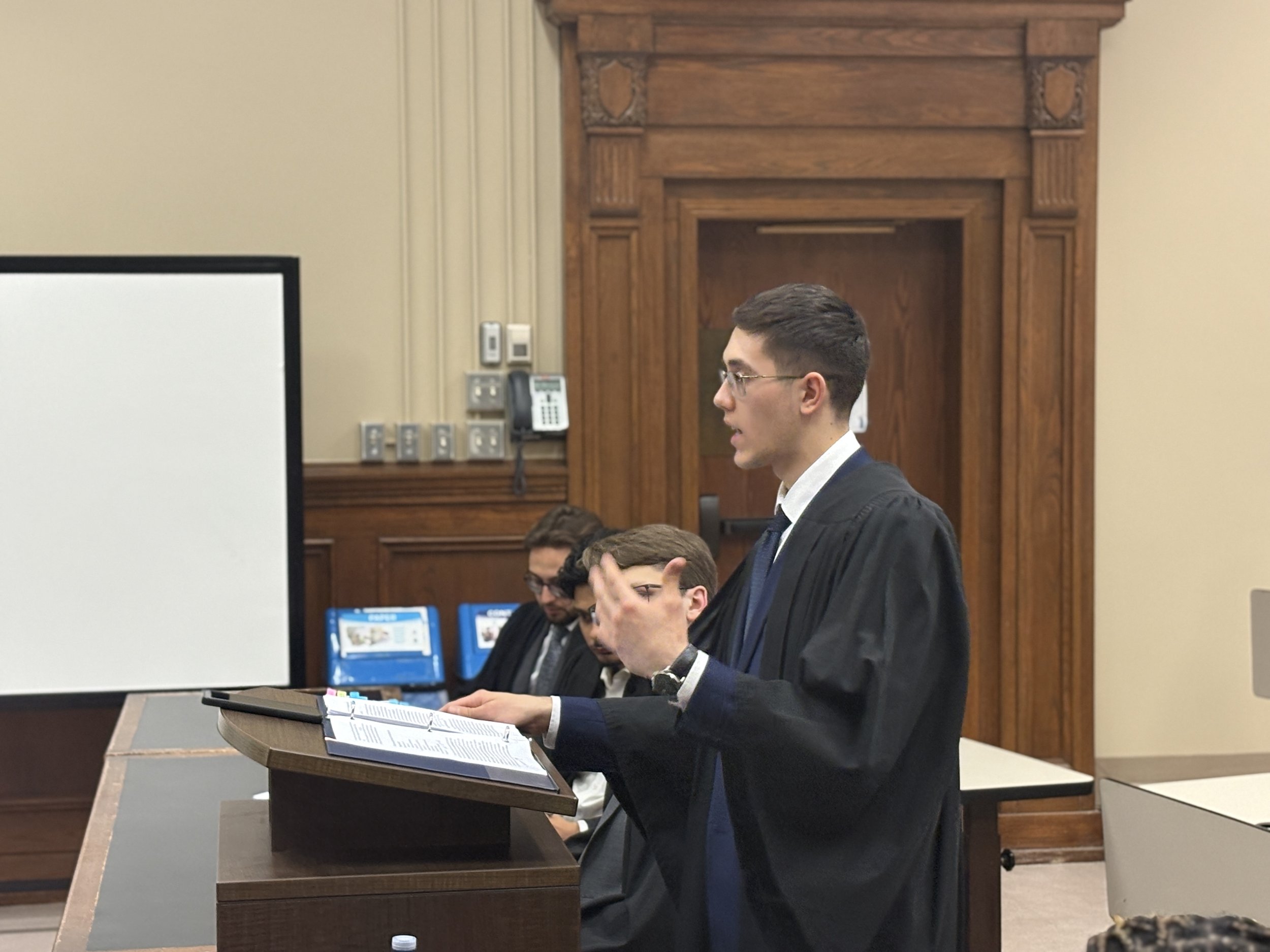
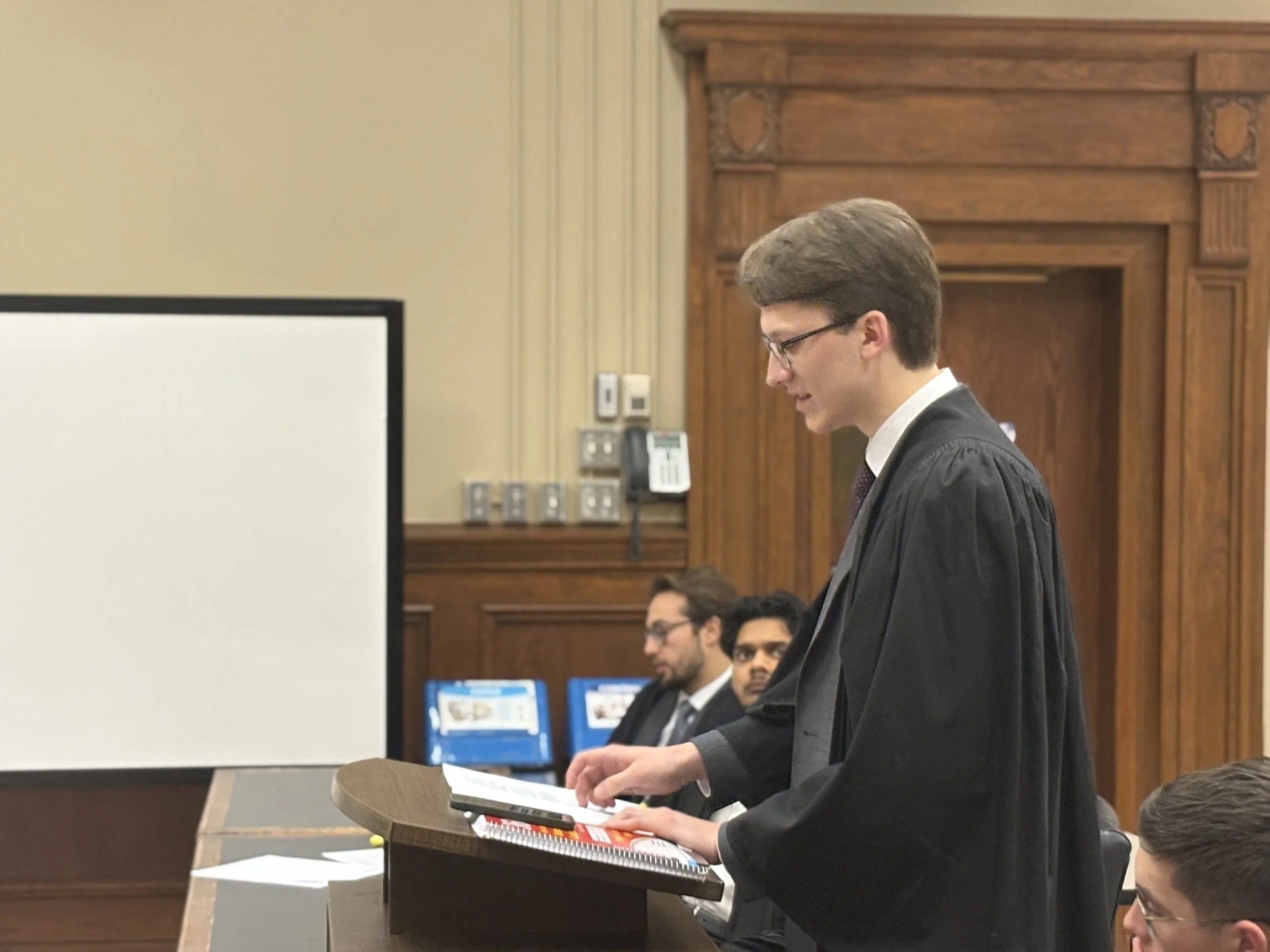
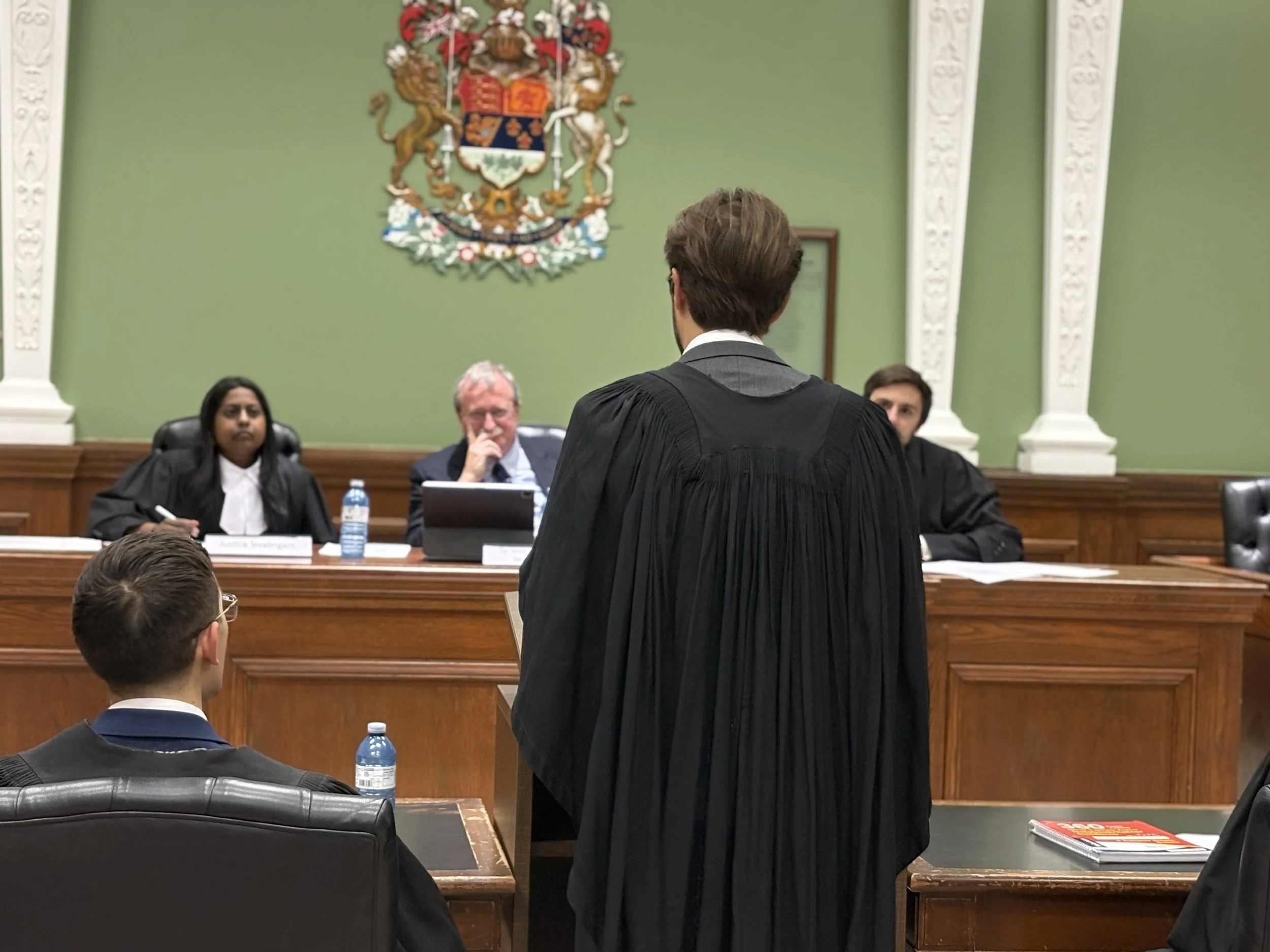
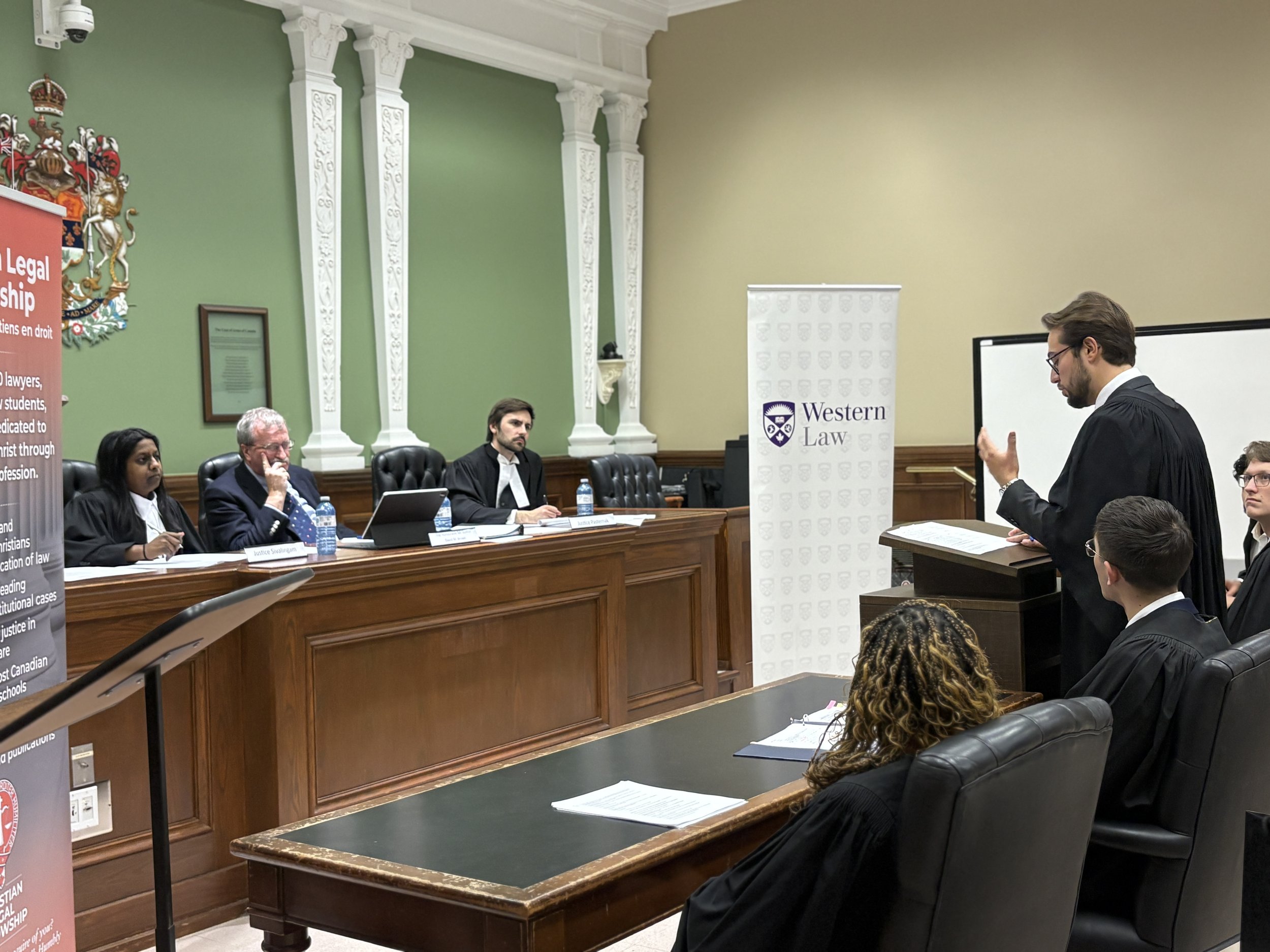
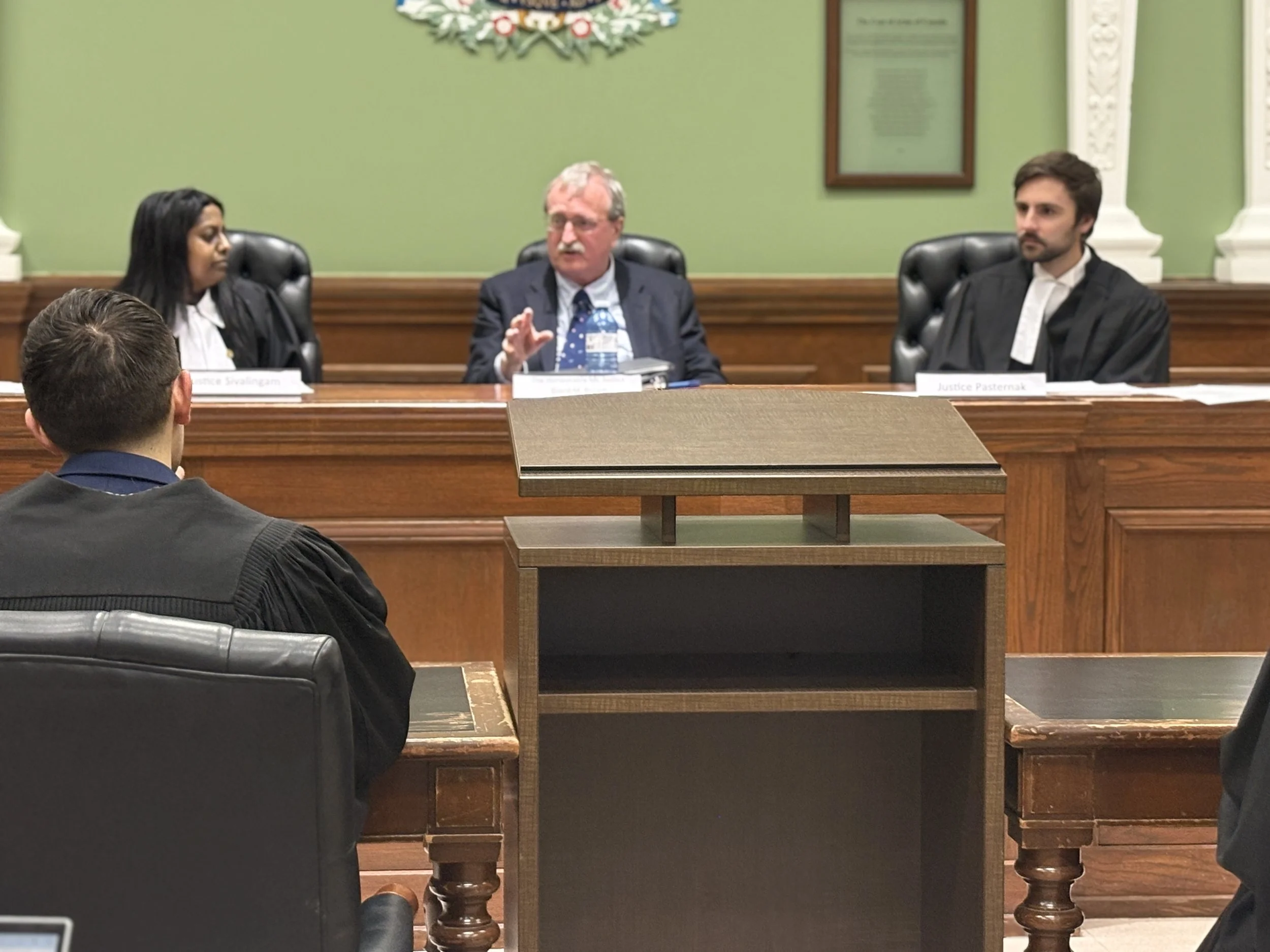
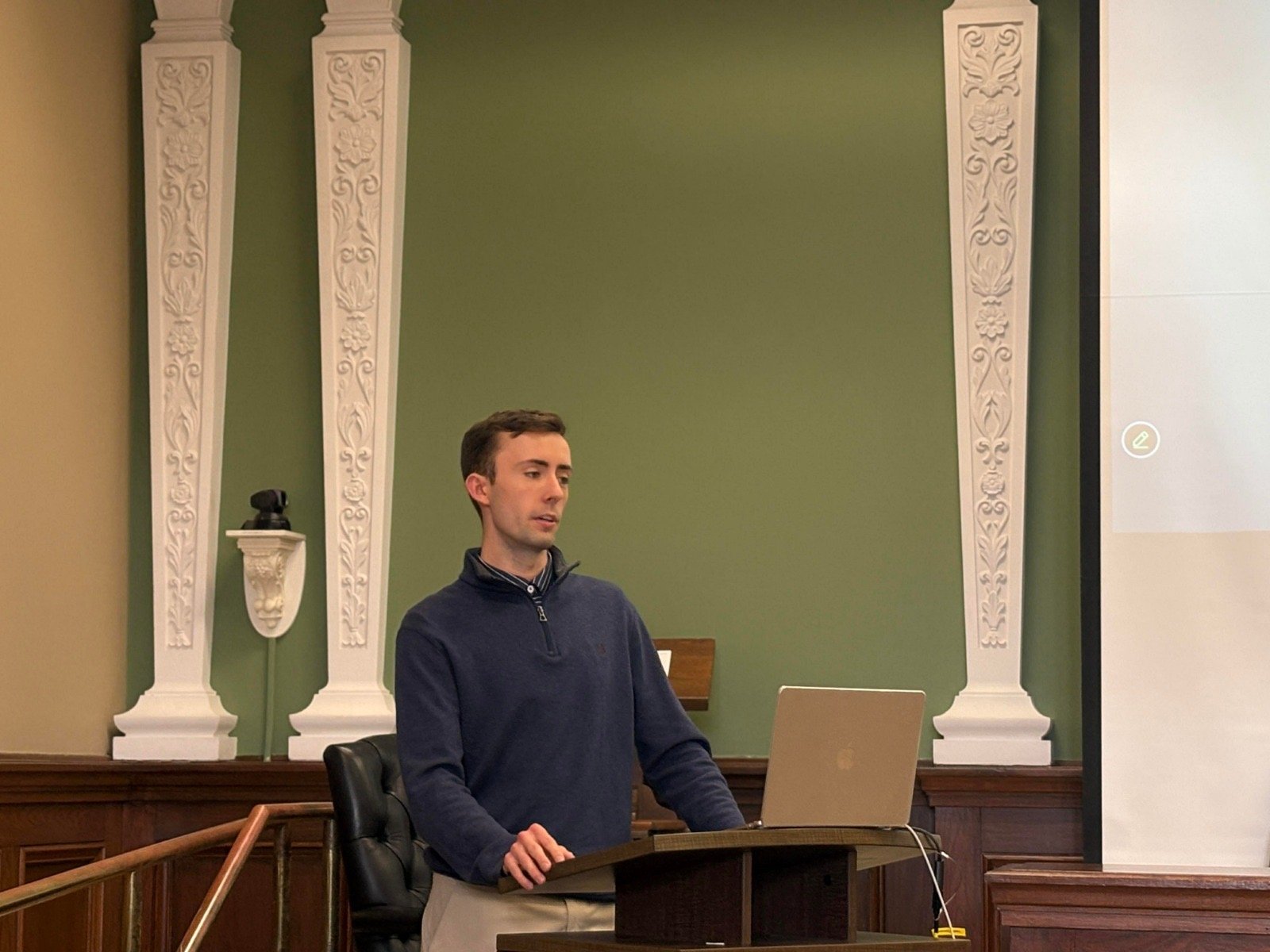
We are incredibly proud of all the competitors, and especially wish to congratulate our finalists: Soban Atique, who placed first, Mobolu Coker, who placed second, and Joshua Vito, who placed third. We also recognize Mihai Covaser and Samuel Moore for their outstanding performances in the final round. We also want to thank Western Law for their support in hosting the moot, and especially to Associate Dean Danielle LeCasse for her very kind remarks and warm welcome to all participants.
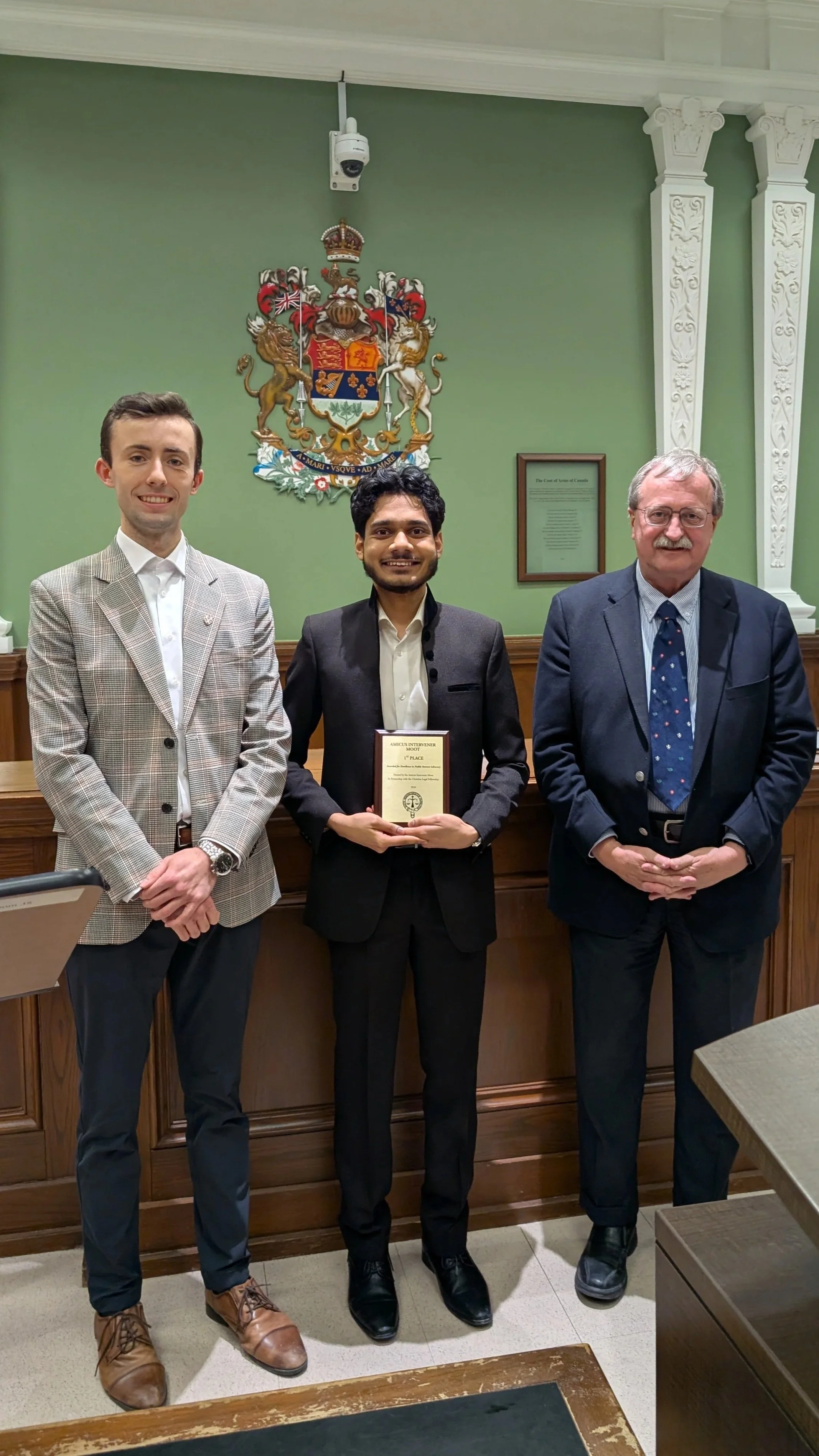
Soban Atique, 1st Place
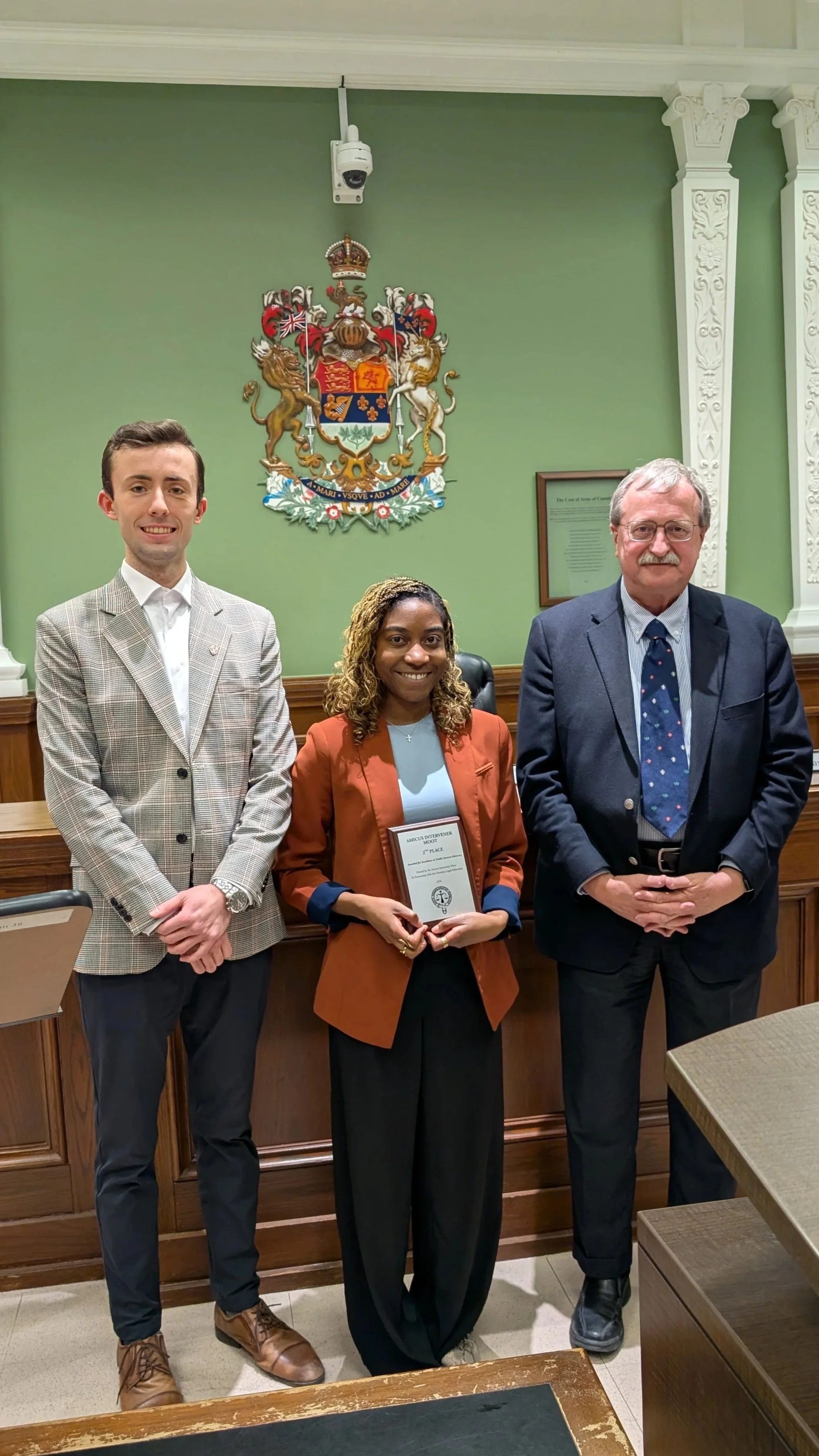
Mobolu Coker, 2nd Place
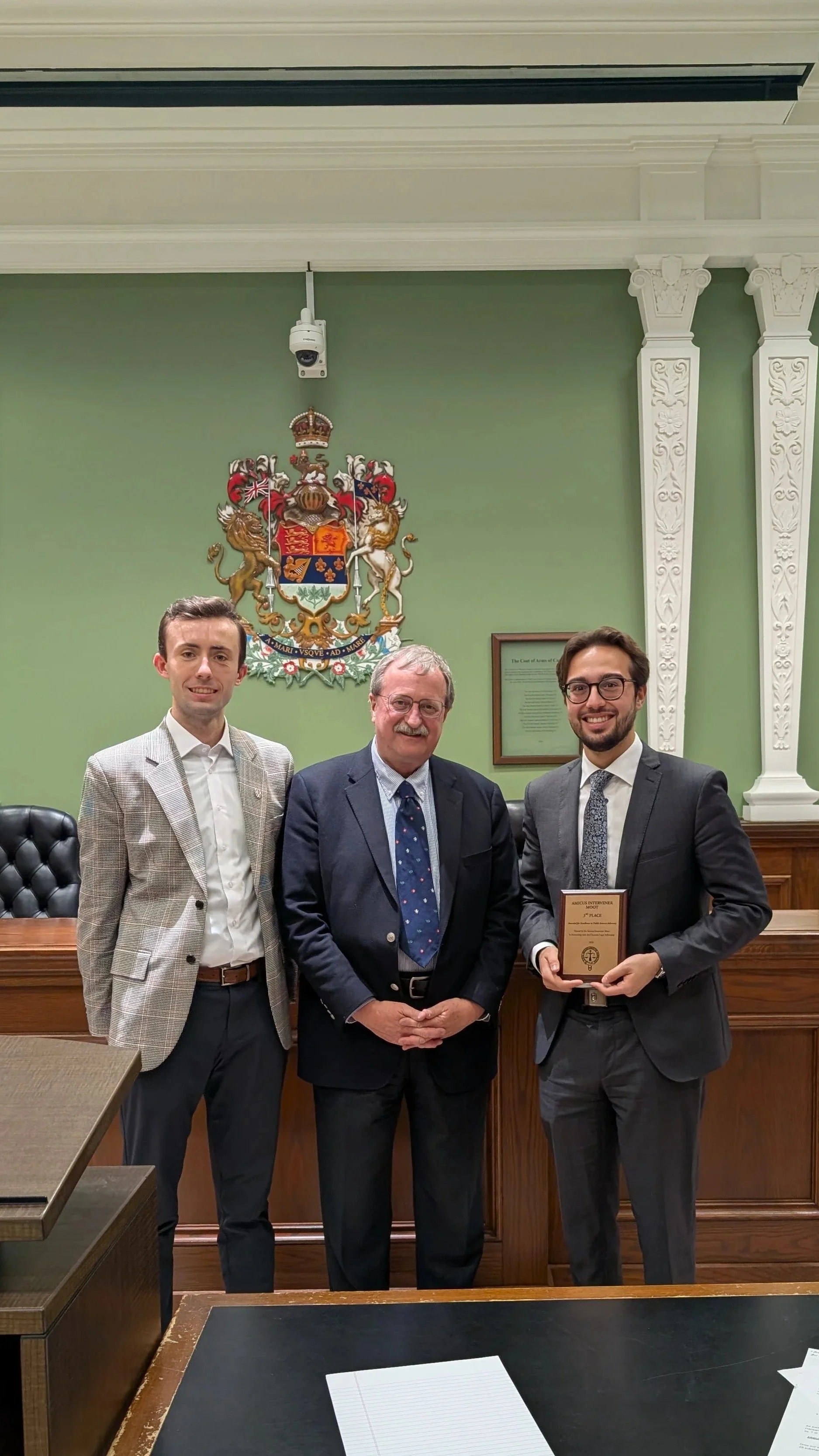
Joshua Vito, 3rd Place
As we reflect on this first year, it is clear that what began as a simple conversation has grown into something much more significant. The Amicus Moot has created a new space within CLF – for all law students across Canada – to develop their advocacy skills, engage with pressing legal issues, and explore the unique role of intervention in the legal system.
We look forward to building on this momentum in the years ahead by expanding the competition, welcoming more schools, and continuing to foster excellence in advocacy.
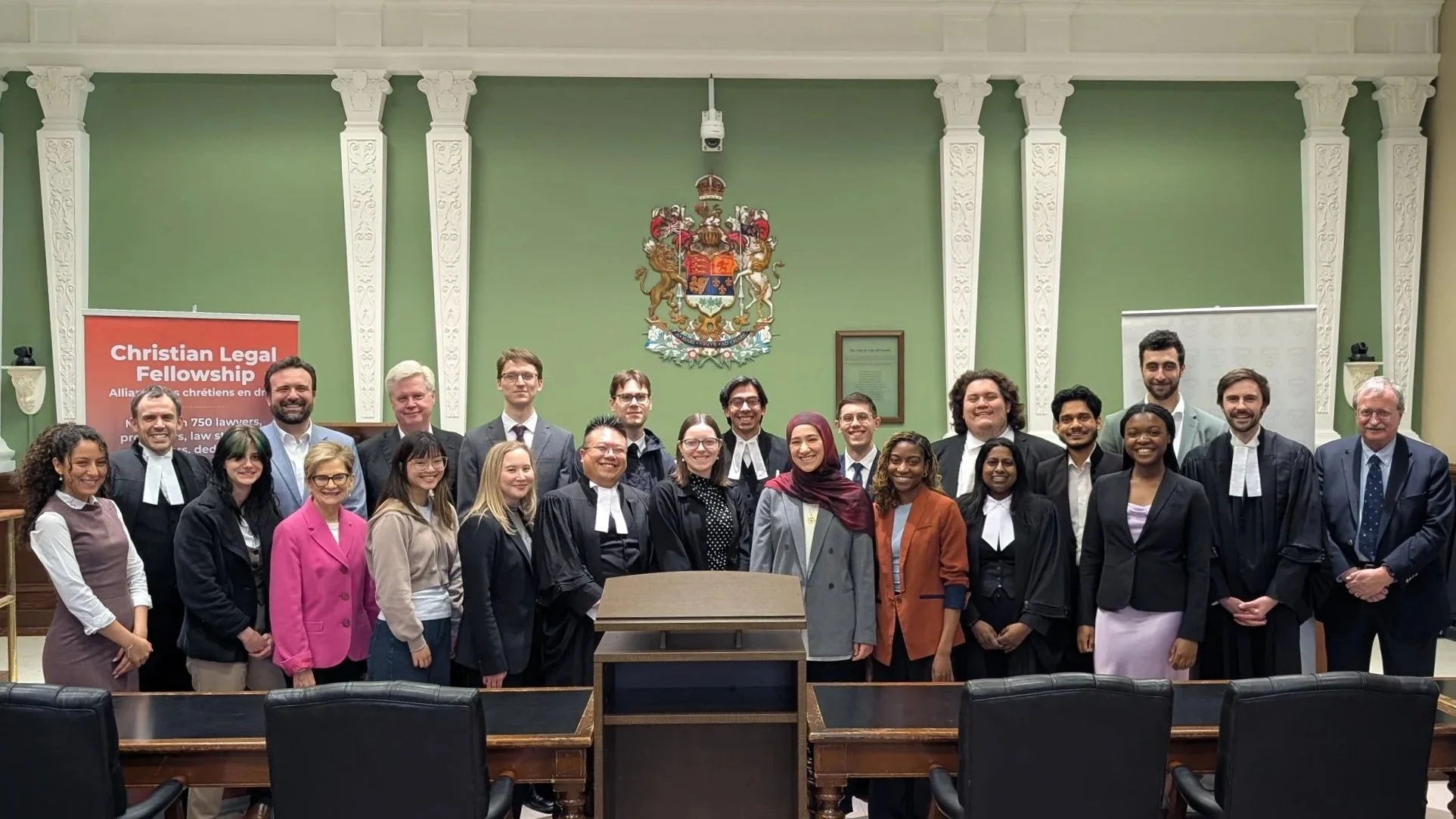
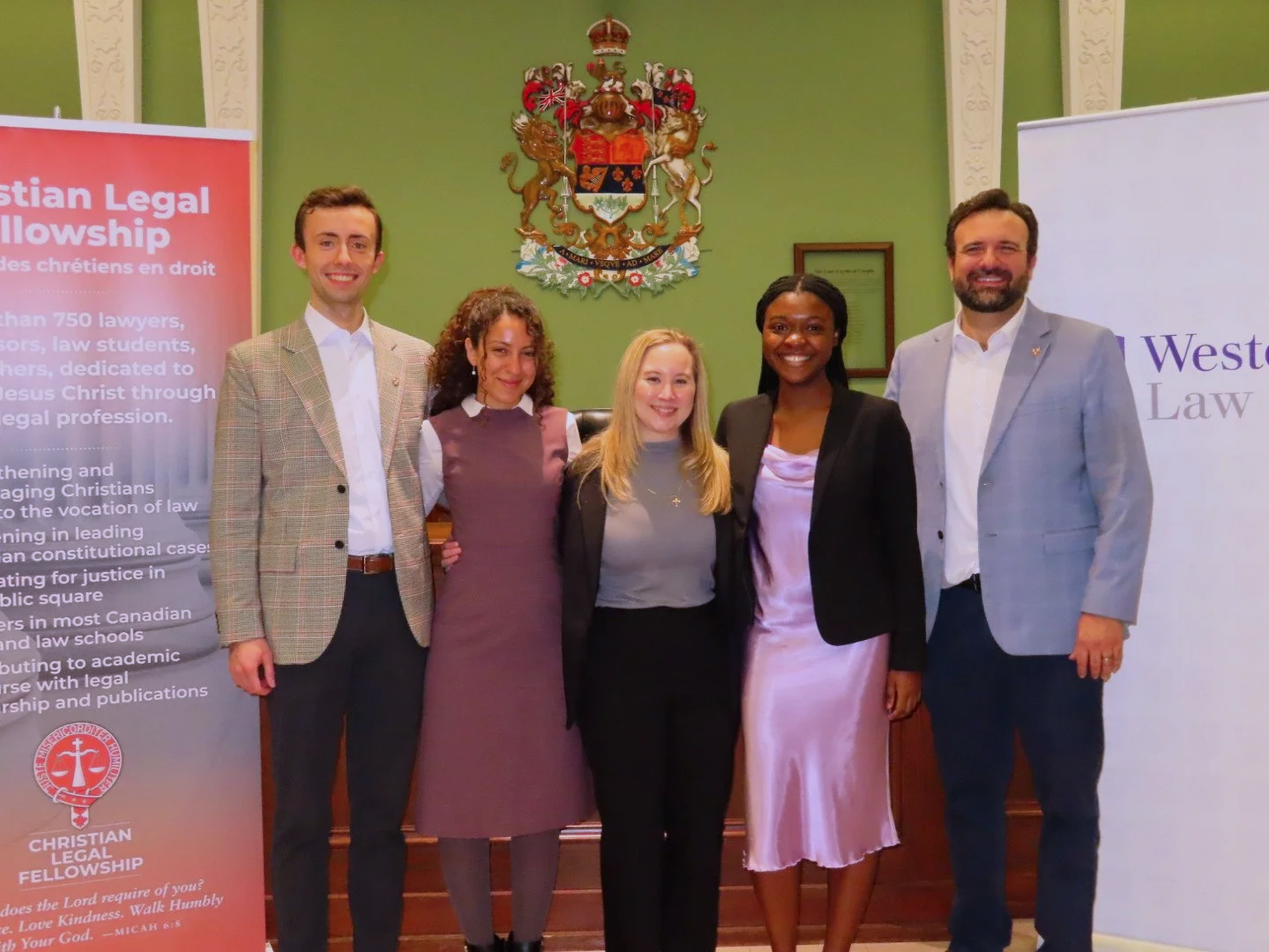
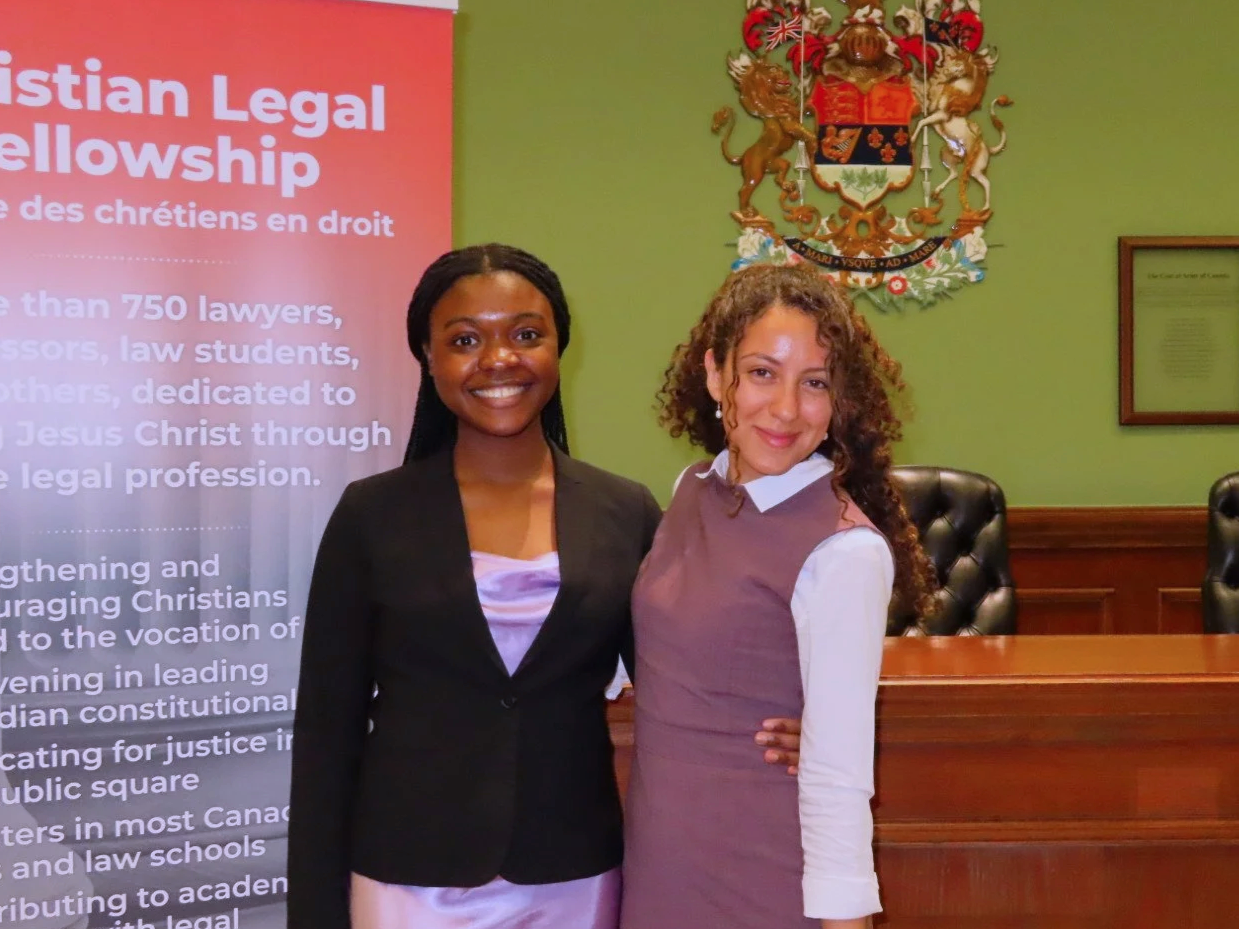
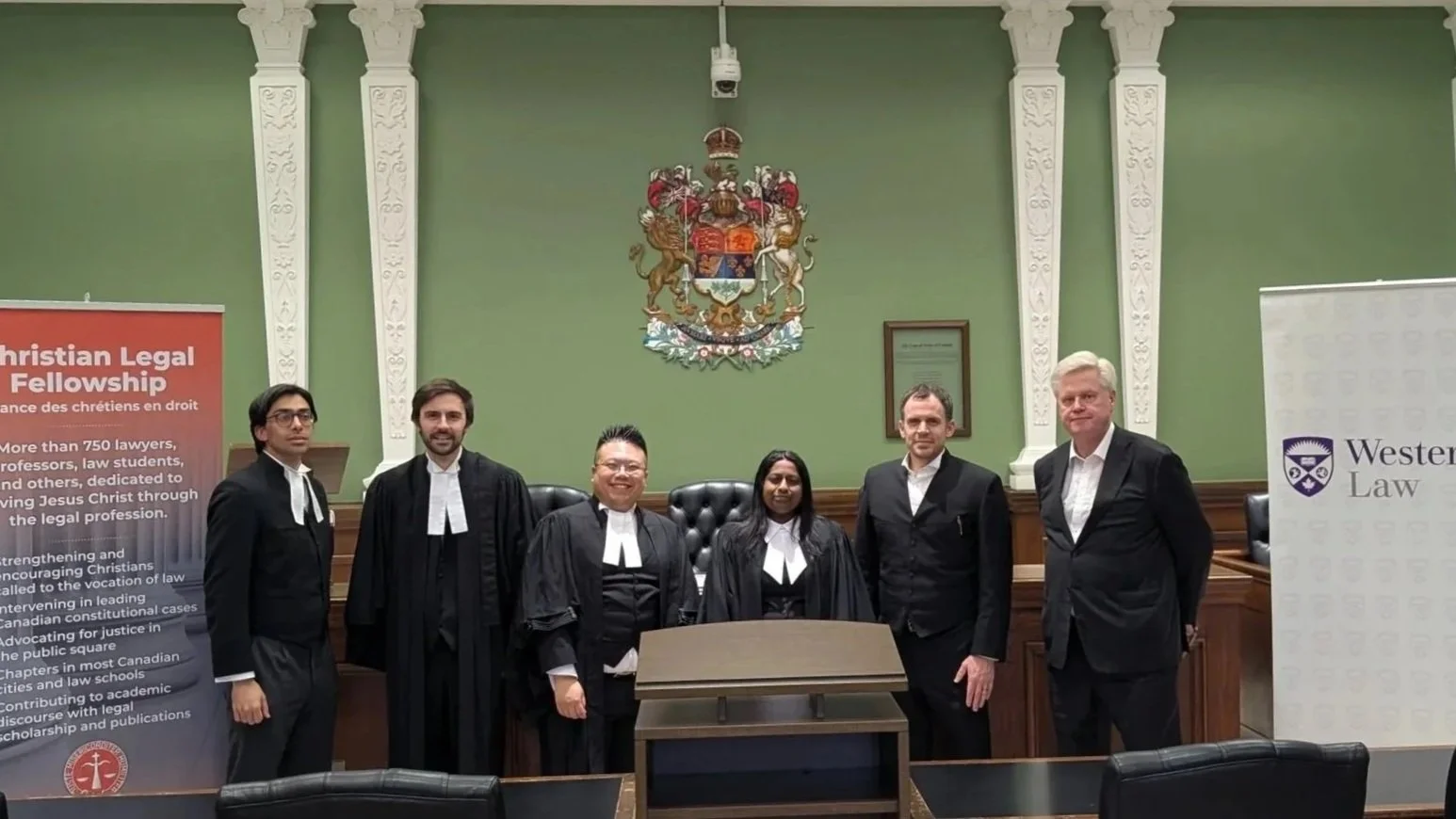
Special thanks to Eric Flowers, Haneen Bishara, Stefania Vomiero, and Ebun Akomolafe (pictured with Derek Ross of CLF National), as well as David Manukian (not pictured) for their leadership in organizing the 2026 Amicus Intervenor Moot.

Haneen Bishara is a 3L student in the HBA/JD Dual Degree Program at the Ivey Business School and Western Law. Over the past three years, she has served as Vice-Chair of Western Law’s CLF chapter and is currently the Co-President of the Runnymede Society chapter at Western. These leadership roles, alongside her participation in the Christian Legal Institute, have deeply shaped her interest in constitutional law. As an avid mooter, Haneen recently represented Western University at the national level in the Laskin Moot. These experiences inspired her to co-found the Amicus Intervenor Moot, a national competition dedicated to teaching students about constitutional and intervention advocacy. Haneen has spent the past two summers at Hicks Morley LLP focusing on labour, employment, and human rights law, and will return to the firm to article. Beyond her academic and professional pursuits, she serves as an executive with Coptic Lawyers Canada, where she mentors young Orthodox Christian lawyers. In her personal time, Haneen is a classically trained harpist and remains an active member of her church community.
LEARN MORE
Follow @amicusmoot on Instagram
Learn more about Christian Legal Fellowship’s intervenor work
Learn more about Christian Legal Fellowship’s law student ministry
Apply to become a Member of CLF National