

UPDATE: Bill C-9 received Royal Assent on June 18, 2026, and is now law in Canada.
As previously reported, Christian Legal Fellowship (CLF) was invited to appear before the House of Commons Standing Committee on Justice and Human Rights to make submissions on Bill C-9, An Act to amend the Criminal Code (hate propaganda, hate crime and access to religious or cultural places).
Bill C-9 was proposed to strengthen Canada’s anti-hatred regime by amending the Criminal Code to create new offences for hate-motivated crimes and intimidation, as well as to codify a definition of "hatred”, among other proposed amendments.
Among other submissions, CLF encouraged the Committee to maintain the Criminal Code’s s. 319(3) defences, which exist to protect Canadians against imprisonment for good faith expression of sincerely held beliefs. CLF submitted that the s. 319(3)(b) defence (for good faith religious expression) is directly in line with principles of justice and equality that inform efforts to combat discrimination and hatred, and that to remove this defence would risk undermining the constitutional integrity of the entire s. 319 regime.
Unfortunately, the Committee later voted to remove this defence. Bill C-9 was amended accordingly, and has now passed in the House of Commons — but it still needs approval from the Senate, where it will first be studied and debated further.
Many are deeply concerned about Bill C-9’s potential implications for religious expression, and we share those concerns. CLF has been in regular contact with the Justice Committee, and the Justice Minister's office, about this.
In response to concerns raised by CLF and other groups, the government introduced a “for greater certainty” clause to Bill C-9. While the government’s public statements in support of this clause were an encouraging step in the right direction, CLF remains concerned that it does not fully address the very serious concerns about the potential (mis)interpretation of the offence. The clause reads as follows:
For greater certainty, nothing in subsection 319(2) or (2.2) of the Criminal Code shall be construed as prohibiting a person from communicating a statement on a matter of public interest, including an educational, religious, political or scientific statement made in the course of a discussion, publication or debate, if they do not wilfully promote hatred against an identifiable group by communicating the statement.
We appreciated the Parliamentary Secretary’s affirmation, in introducing this clause, that “the bill will state in plain terms that nothing in this legislation affects worship, sermons, prayer, religious education, peaceful debate, or even the good faith reading and discussion of religious texts”. However, it is important that this be expressed more clearly in the text of the bill itself. This is why CLF, and many others, urged the Justice Committee not to repeal the defence for good faith religious expression in the first place.
CLF has explained to the Justice Committee and to the government that the bill needs to clarify what is - and what is not - included in the meaning of "wilful promotion of hatred". Stating that communications on a matter of public interest are protected so long as they do not wilfully promote hatred does not address the central issue, which is: what constitutes the wilful promotion of hatred to begin with?
CLF has recommended amendments to address this concern, and to make clear what is to be excluded from the scope of the offence: namely, good faith communications about ideas and opinions (rather than bad faith statements vilifying individuals).
We will continue to work with Parliamentarians from all parties, as well as the Senate, to see these proposed amendments adopted, and to protect good faith expression. In this regard, it was encouraging that the Justice Committee agreed to tighten the definition of "hatred", which was another CLF recommendation. Now it reads as follows:
"hatred means an emotion of an intense and extreme nature that involves is clearly associated with vilification and detestation" (new language underlined).
CLF is grateful for the invitations extended to us by those reviewing and examining this legislation. We look forward to the opportunity to contribute further in the next stages of this Bill.
Learn more in the video below about CLF’s concerns surrounding religious expression under Canada’s anti-hatred laws.
WATCH CLF’S VIDEO ON BILL C-9
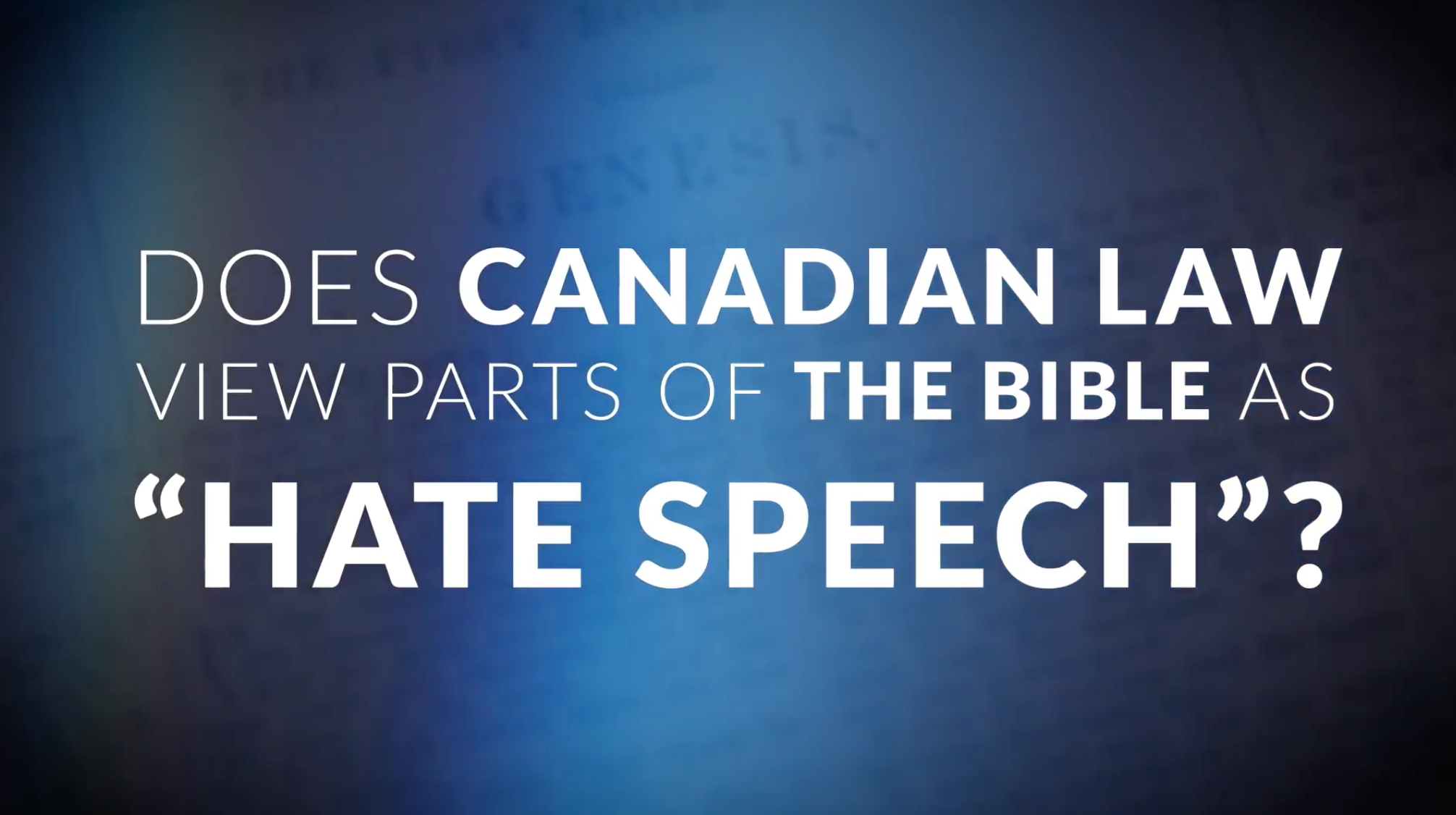
This video explains why Canada's Criminal Code currently protects the expression of good faith religious opinions - and why this defence should be retained. Since this video was recorded, the House of Commons voted to remove this defence. The matter will now be studied and debated in the Senate.
LEARN MORE
Read more about CLF’s appearance before the Standing Committee, including CLF’s written brief and follow-up letter to the Standing Committee
Read CLF’s written submissions to the Standing Committee (English, Français)
Watch the video of CLF’s appearance before the Standing Committee on October 30, 2025