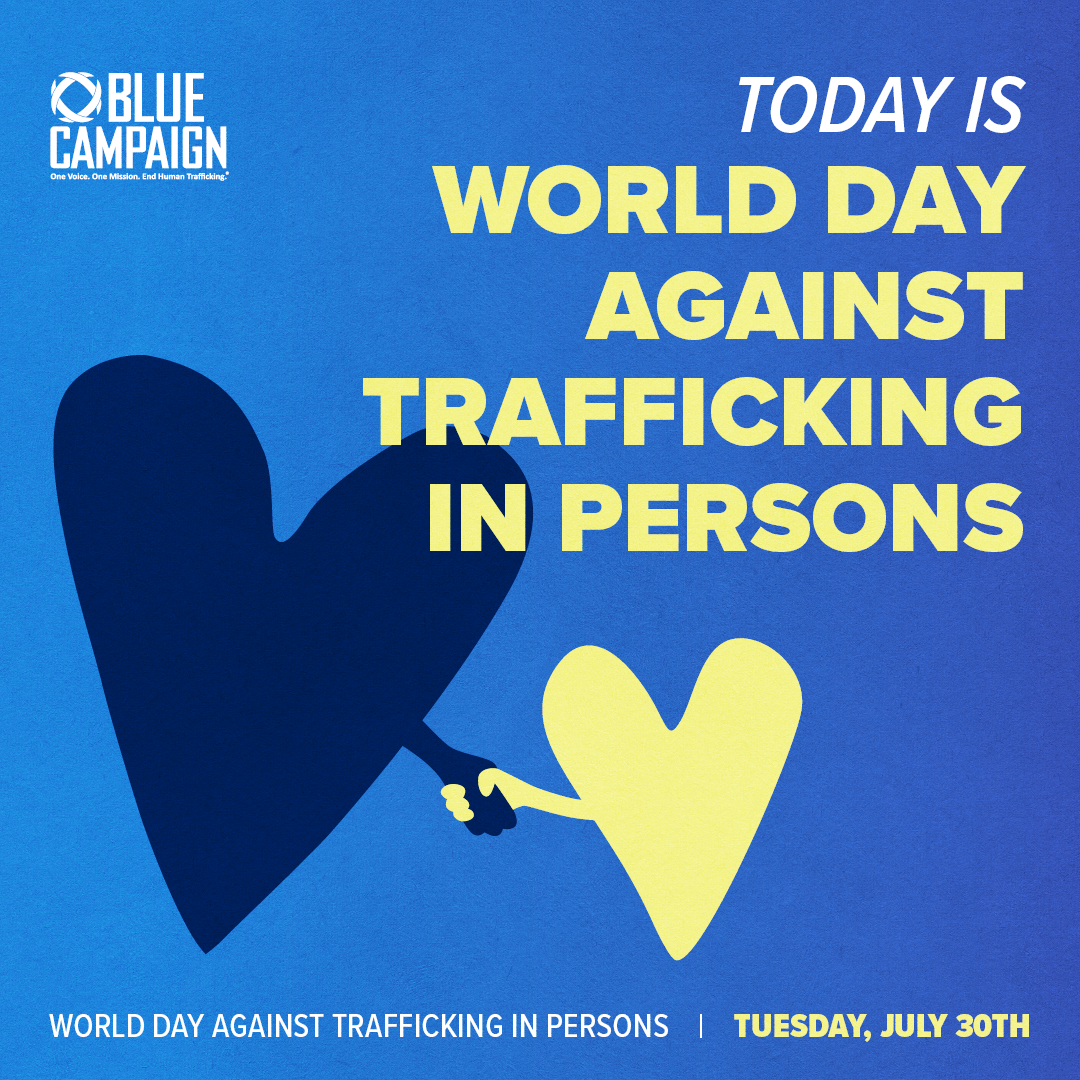

Today, on World Day Against Trafficking in Persons, Christian Legal Fellowship (CLF) recognizes that trafficking in persons is a serious crime and a grave violation of human rights.
Trafficking in persons is a serious concern both in Canada and around the world, and its true extent is not fully known given its hidden nature and the many barriers to detection and reporting.
The most recent police-reported data in Canada shows that women and girls make up the vast majority (93%) of victims, two thirds of whom are under the age of 25. Approximately two in five human trafficking incidents contain multiple violations, more than half of which are related to the sex trade.
At CLF, we believe that “all human beings are born free and equal in dignity and rights” (Article 1, Universal Declaration of Human Rights). This core belief animates the work of CLF to combat discrimination, exploitation, and trafficking in Canada and around the globe, anchored in our deep conviction that every human life deserves respect and full legal protection.
CLF has long supported and defended Canada’s laws which “denounce both the objectification and the commodification of the human body”, in order to “uphold the dignity of victims, which is gravely wounded by offences related to the commodification of sexual services” (Quebec (Attorney General) v Denis at para 44, citing R v Kloubakov [emphasis added]).
As an organization of Christian lawyers, law students, and other legal professionals, CLF seeks to uphold human rights and defend the vulnerable and marginalized through:
our advocacy before the courts to help decision-makers understand Canada’s international human rights obligations, including before the Supreme Court of Canada in R v Kloubakov, a decision which upheld Canada’s prohibitions on profiting from, or inducing, the sale of another person’s sexual acts;
our participation in various legislative and policy consultations to support laws that eliminate the demand for sex trafficking, including the International Centre for Criminal Law Reform & Criminal Justice Policy’s consultations regarding the Palermo Protocol;
our academic Centre for Religion, Law and Human Rights, through which we have supported research papers from eminent scholars highlighting the harms caused by sex trafficking and systems of prostitution; and
our work as an NGO in Special Consultative Status with the United Nations’ Economic and Social Council (ECOSOC).
The Supreme Court of Canada recently affirmed in Quebec (Attorney General) v Denis that the commodification of sexual activity constitutes exploitation (para 47). For child victims it is doubly exploitive, given the exploitation inherent in all sexual abuse of children, being a “highly vulnerable population” (para 46). The Court further recognized that sexual offences committed against children are never victimless, even in sting operations or in the absence of a specific victim, “since people feed the market that profits from their exploitation”, and “[t]he child sex trafficking industry prospers because it is ‘strategically invisible’” (para 58 [emphasis added]; see also para 98).
CLF will continue in its advocacy to “‘discourage the demand that fosters all forms of exploitation of persons, especially women and children, that leads to trafficking”, in keeping with Canada’s commitments under the Palermo Protocol (Article 9(5)).
Today, and every day, CLF stands with victims and survivors of trafficking in persons.
video: human trafficking in canada
FURTHER READING
CLF’s intervention before the Supreme Court of Canada in R. v. Kloubakov, and CLF’s analysis of the Court’s decision
CLF’s submissions to the Standing Committee on Justice and Human Rights (English, French), and CLF’s analysis of Committee’s report
CLF’s participation in the International Centre for Criminal Law Reform & Criminal Justice Policy’s consultations re the Palermo Protocol
CLF’s submissions to the Standing Committee on Access to Information, Privacy and Ethics re: online exploitation
CLF’s latest quadrennial report as an NGO in Special Consultative Status with the United Nations’ Economic and Social Council (ECOSOC)