CLF intervened after government denieD space for faith gathering due to disapproval of religious beliefs
Cet article est aussi disponible en français
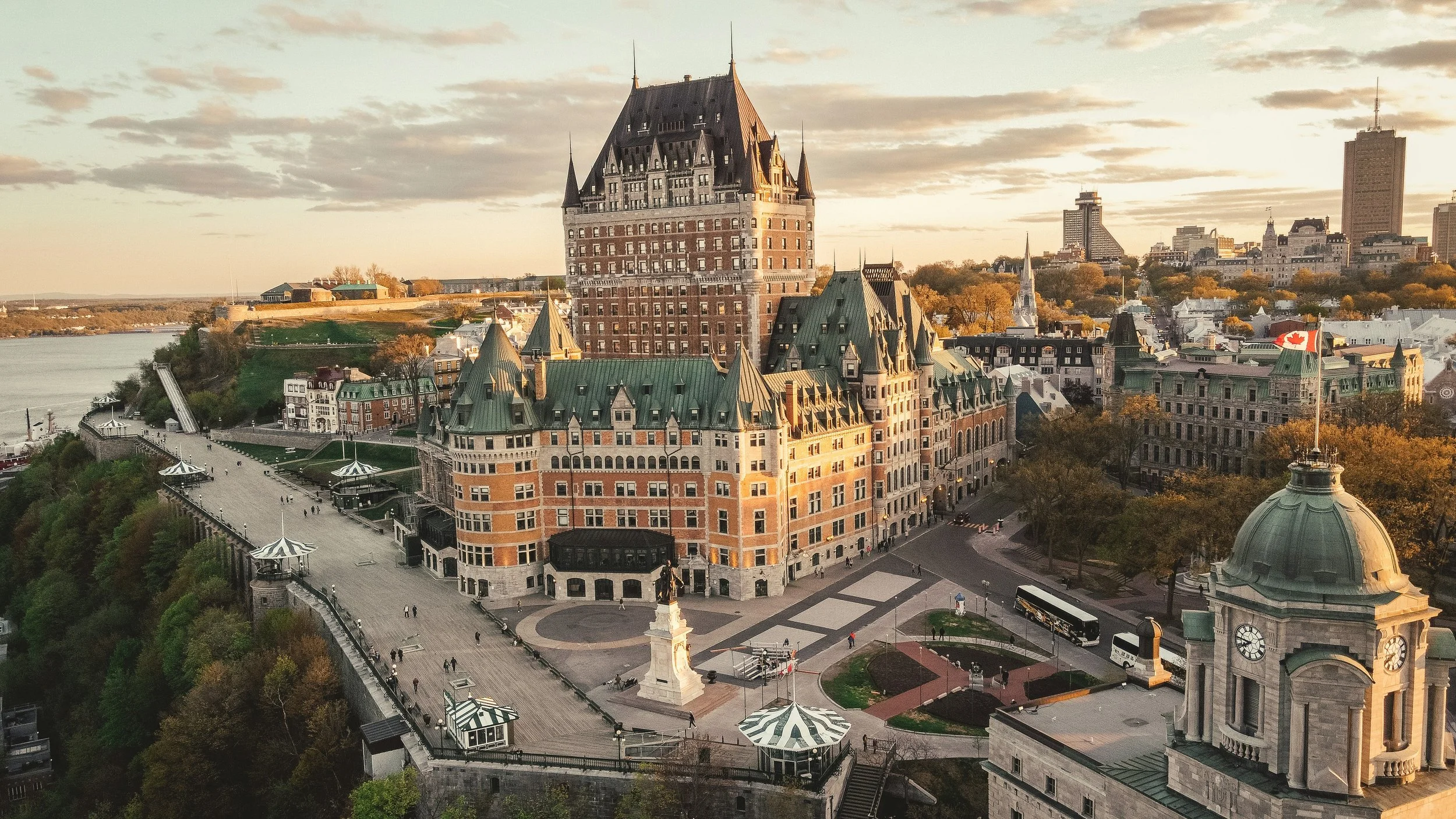
Today, the Québec Superior Court ordered the Québec government and a former cabinet minister to pay compensatory and punitive damages to a Christian group after unilaterally cancelling their contract to hold a religious event at the Québec City Convention Centre.
Québec’s Minister of Tourism had ordered the cancellation because she disagreed with religious opinions the Plaintiff had previously expressed regarding the sanctity of human life, particularly pre-born human life. Even though the conference was hosted by a private religious group (and was not even related to the subject of abortion), the government insisted that allowing a group with pro-life opinions at the Centre would have been incompatible with their “resolutely pro-choice” values.
Today, however, the Québec Court ruled that the government’s actions constituted a “serious violation of the plaintiff’s freedom of expression” [translation], denying the plaintiff the opportunity to share a message in a public space specifically designed to promote the transmission of ideas, democratic debate, and the pursuit of truth, simply because it was presumed to be at odds with majority opinion (paras 110, 116-117).
Christian Legal Fellowship (CLF) intervened in the case to argue that "eligibility for the use of public spaces must not be conditional on groups adhering to government-approved views, beliefs, or opinions." CLF’s submissions were reflected in the Court’s judgment:
“Preventing a message that displeases the minister or causes deep unease within the government from being disseminated in the public sphere does not constitute a pressing and substantial objective that justifies a restriction on freedom of expression. In the absence of a legal rule that is otherwise justifiable under section 1 of the Charter, access to or use of public spaces cannot depend on whether or not the user subscribes to a particular line of discourse.”
CLF welcomes the decision’s strong affirmation of freedom of expression, and intervened in the case in recognition of its potentially far-reaching implications. Derek Ross, CLF’s Executive Director and General Counsel, comments:
““If the government can discriminate against religious groups whose beliefs they disapprove of, it is to the detriment of every other Canadian whose beliefs may, today or in the future, be deemed ‘controversial’ by those who happen to be in power. This cannot stand in a free and democratic society that constitutionally cherishes both freedom and equality. This decision sends a clear message to public actors across the country: governments must not deny equal services to religious groups based on disapproval of their beliefs.” ”
CLF’s legal submissions to the court can be read below (both in the original French version and an English translation), and the court’s decision can be read here. CLF is grateful to Jacques S. Darche and his team at Prelian Canada LLP in Montreal for their able assistance on this file. The Réseau évangélique du Québec, Canadian Centre for Christian Charities, and Evangelical Fellowship of Canada also jointly intervened in this matter, represented by CLF member Robert Reynolds.
This decision follows another encouraging development in a separate case CLF recently intervened in. In Église Baptiste Évangélique de Chicoutimi v. Ville De Saguenay et al, the City of Saguenay had cancelled a contract with a Baptist church, insisting that it could not sub-lease publicly occupied property (the basement of a former church building) to a religious group for worship services. CLF was granted leave to intervene in a challenge to that decision, and our participation had a positive impact. Jacques Darche, who represented CLF in this intervention, explains:
"The City recently conceded that, with the coming into force of some new provisions of the Act respecting the laicity of the State of Québec, it could and would now permit a religious practice in a space leased under its authority. Consequently, the City is now willing to allow the Church to sub-let part of a building occupied by the City for its weekly religious services, reversing its previous decision which had forced the Church to institute its action in which the CLF intervened. In this context, the Parties reached a satisfactory agreement and the Plaintiff desisted itself from its action."
CLF is grateful for this favourable outcome.
CLF will continue to advocate for the fundamental freedoms of all Canadians to worship without undue state interference, and to be treated as full and equal participants in Canadian life.
Read CLF/ACD's factum below:
Official version:
Unofficial English translation:
(Click the “[ ]” icon to enable full screen mode)
Read more about the case here.